
Body Recomposition with Peptides — Build Muscle and Lose Fat Simultaneously
The science of using growth hormone peptides and GLP-1 compounds together to achieve true body recomposition — losing fat while preserving and building lean mass at the same time.
What Recomposition Actually Means
Body recomposition — "recomp" in gym parlance — means doing two things at once that conventional wisdom insists cannot coexist: losing body fat and gaining skeletal muscle simultaneously. For decades, training and nutrition coaches have organized their programs around the binary choice of bulk or cut, gain or lose. The argument is straightforward: building muscle requires a caloric surplus, while losing fat requires a caloric deficit, and you cannot be in both states at the same time. This logic is correct when applied to standard dietary and training interventions alone.
Most gym advice says pick one. Bulk or cut. Gain or lose. But that framework assumes normal hormonal signaling — and peptides change that equation entirely. The reason simultaneous recomp is so difficult under normal conditions isn't the math of calories in and out — it's that the hormonal environment required for aggressive fat oxidation (low insulin, elevated catecholamines, caloric restriction) is antagonistic to the hormonal environment required for muscle protein synthesis (elevated insulin, mTOR activation, amino acid availability). Peptides can selectively activate the lipolytic signals independently of the anabolic signals, creating a hormonal environment that wouldn't arise naturally.
Simultaneous recomp requires two things happening at the same time at the cellular level: elevated protein synthesis in muscle tissue (driven by GH, IGF-1, mTOR) and elevated fat oxidation in adipose tissue (driven by lipolytic hormones and AMPK activation). Growth hormone, which is the primary hormone elevated by GH secretagogue peptides like CJC-1295 and Ipamorelin, happens to be both directly lipolytic and indirectly anabolic — it breaks down fat while simultaneously stimulating IGF-1 production and muscle protein synthesis. This dual action is what makes the GH axis the most mechanistically apt target for recomposition research.
The GH Axis for Recomp
Growth hormone is the master hormone for body composition. It is directly lipolytic — it activates hormone-sensitive lipase within fat cells, hydrolyzing stored triglycerides and releasing free fatty acids into the bloodstream for use as fuel. At the same time, GH is anabolic: it stimulates hepatic production of IGF-1, which activates the mTOR signaling cascade in muscle fibers, driving ribosomal protein synthesis and muscle hypertrophy. The unfortunate reality is that endogenous GH secretion declines with age, declining roughly 14% per decade after peak in adolescence. This is one of the primary drivers of the gradual body composition shift — more fat, less muscle — that occurs in adulthood.
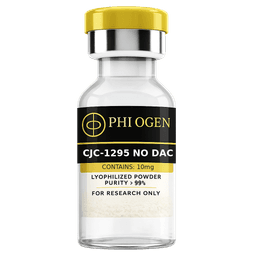
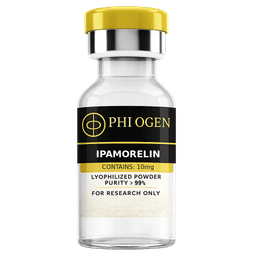
CJC-1295 (no DAC) is a GHRH analogue that binds the pituitary GHRH receptor and amplifies the natural GH pulse. Ipamorelin is a selective ghrelin receptor agonist that independently stimulates GH release through a separate receptor pathway. When combined — and this is the elegant part — they act synergistically. CJC-1295 activates the GHRH pathway to increase pulse amplitude while Ipamorelin activates the ghrelin receptor (GHS-R1a) to increase pulse frequency. The result is GH output that can be 2-10× greater than either compound alone, without meaningfully suppressing the hypothalamic-pituitary axis feedback because the pulses still follow a natural physiological pattern rather than creating constant supraphysiologic levels.
The dual stimulation of GHRH and ghrelin receptor pathways is what distinguishes the CJC-1295 + Ipamorelin combination from older GH secretagogues. Earlier compounds like GHRP-2 and GHRP-6 worked but caused significant cortisol and prolactin elevation, which partially undermined fat loss outcomes. Ipamorelin's receptor selectivity avoids this, giving you a clean GH pulse that is anabolic and lipolytic without the unwanted hormonal noise. For recomposition specifically, this selectivity is important: excess cortisol would promote visceral fat accumulation and muscle catabolism — the exact opposite of what you're trying to achieve.
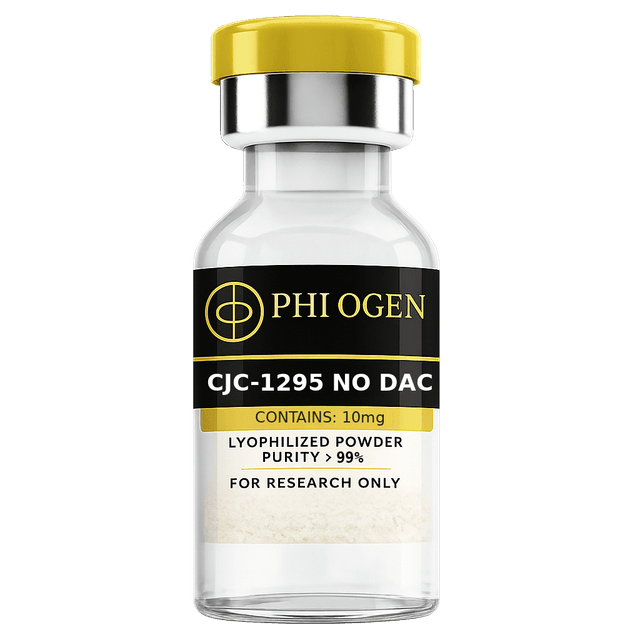
CJC-1295 No DAC 10mg
GHRH analog — stimulates natural pulsatile growth hormone release. Pairs with Ipamorelin.
$79.99—Buy Now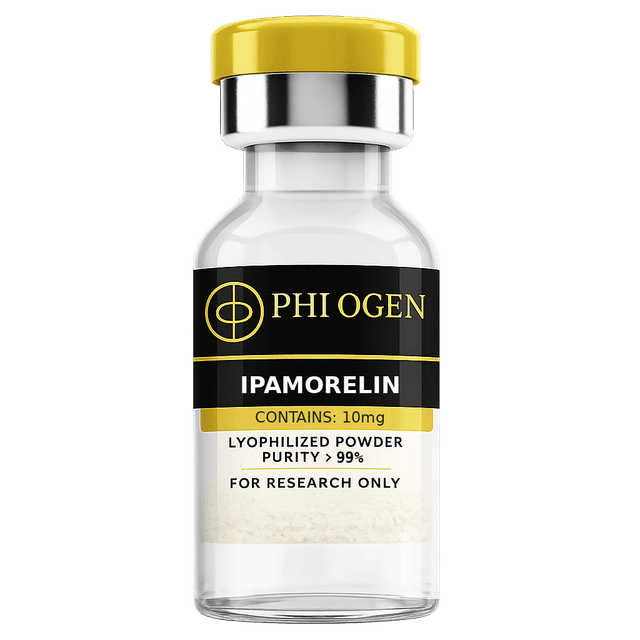
Ipamorelin 10mg
Selective GH secretagogue with minimal side effects — the cleanest GHRP available.
$59.99—Buy NowThe Recomp Equation
Fat Loss Signals
Muscle Preservation Signals
Tirzepatide: Changing the Fat Loss Ceiling
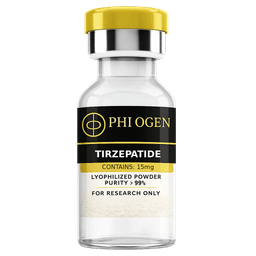
Tirzepatide arrived in the research literature as something genuinely new — a dual agonist at both the GLP-1 and GIP receptors simultaneously. GLP-1 receptor activation in the hypothalamus suppresses appetite through complex neuropeptide signaling, reducing NPY/AgRP activity (hunger peptides) while amplifying POMC/CART signaling (satiety peptides). GIP receptor co-activation adds thermogenic drive via brown adipose tissue activation and enhances insulin secretion in a glucose-dependent manner. The combination isn't just additive — there's synergy between the two receptor pathways that produces greater fat loss than either mechanism alone.
The SURMOUNT-1 trial, published in the New England Journal of Medicine in 2022, was the landmark study that changed the conversation around pharmaceutical fat loss. Participants receiving the highest dose (15 mg weekly) lost an average of 22.5% of body weight over 72 weeks — roughly comparable to the outcomes of bariatric surgery in many studies. This wasn't a modest effect; it was a category-changing result that no other compound had achieved in a Phase 3 randomized controlled trial for obesity. The research community took note immediately.
Crucially for recomposition purposes, Tirzepatide preserves lean mass better than caloric restriction alone. When you crash-diet without hormonal support, approximately 25-30% of the weight lost can be lean mass — muscle, organ mass, bone density. Tirzepatide's mechanism — reducing caloric intake through appetite suppression while maintaining anabolic hormone levels — avoids the dramatic lean mass losses associated with aggressive dietary restriction. This is why pairing it with GH axis peptides for the positive anabolic signals creates a true recomposition environment rather than simple weight loss.
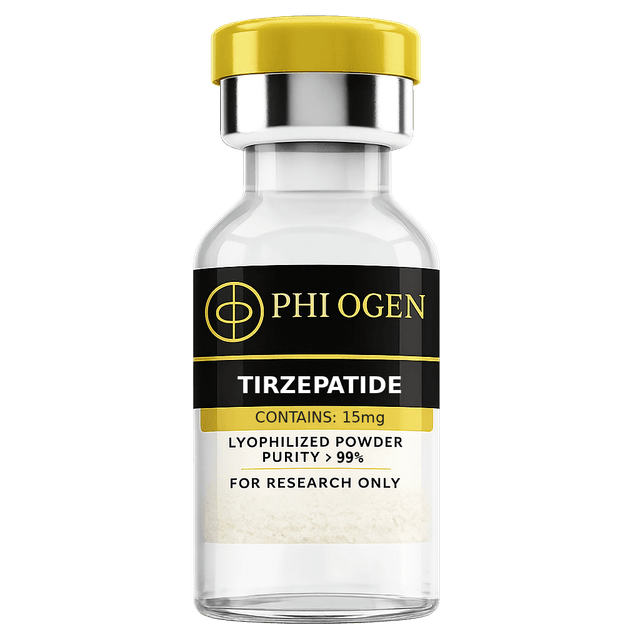
Tirzepatide 15mg
Dual GIP/GLP-1 receptor agonist — clinical trials show 20%+ average weight loss.
$149.99—Buy NowThe 16-Week Recomp Protocol
Based on published literature, a foundational recomposition research protocol combines GH axis peptides with a GLP-1/GIP agonist over a 16-week cycle. The GH secretagogue component — CJC-1295 and Ipamorelin at 100-200 mcg each, 2-3 times per week administered pre-sleep to coincide with the natural nocturnal GH pulse — provides the anabolic and lipolytic foundation. Tirzepatide is introduced on a weekly escalating schedule starting at 2.5 mg and progressing every 4 weeks toward a research target dose, allowing the GI tract to adapt. Sermorelin can be added as a daily bedtime GHRH support compound if deeper GH axis stimulation is desired.
The protocol outlined above is drawn from published research designs and is presented for educational and informational purposes only. These are research compounds, not approved therapies, and the dosing and cycling strategies described here reflect preclinical and early clinical study parameters rather than personal medical recommendations. Anyone researching these compounds should be working within a structured laboratory or clinical research framework. Individual responses in animal and human models vary substantially based on age, hormonal baseline, diet, and training status.
What to Expect Over Time
Research models running combined GH axis + GLP-1 protocols typically show a characteristic timeline. In the first four weeks, the changes are subtle — GH pulse amplitude increases, baseline lipolytic activity rises, and appetite suppression from the GLP-1 component gradually establishes itself as the dose escalates. This early phase is about resetting the hormonal environment rather than seeing dramatic body composition changes. The fat mobilization is happening, but at this stage it's primarily visceral and intrahepatic fat — the least visible deposits but metabolically the most consequential.
By weeks 8-12, the visible shift in fat redistribution becomes apparent in research subjects — waist circumference decreases, the face and neck typically show the earliest visible changes, and lean mass measurements stabilize or increase even as total weight may be declining. The weeks 12-24 range, in studies that have run this duration, show significant body composition shifts in terms of DEXA-measured fat mass versus lean mass ratio. The endpoint is a different body composition at roughly similar or modestly lower body weight — which is the actual definition of recomposition, and why scale weight alone is a poor metric for evaluating these protocols.
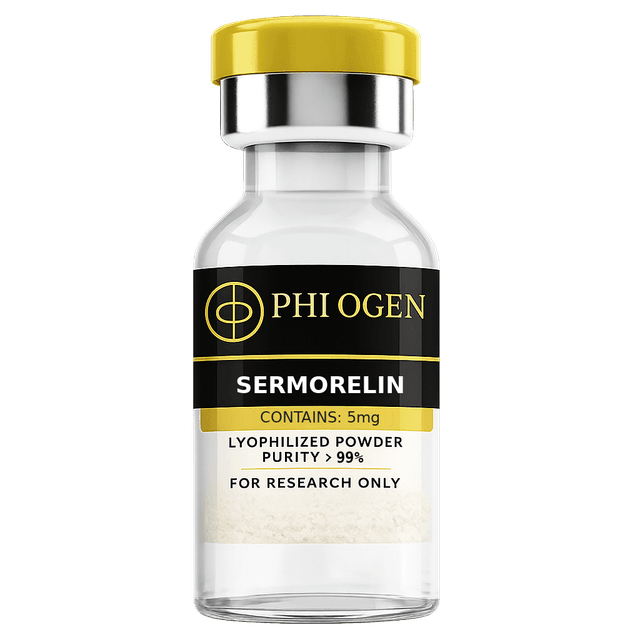
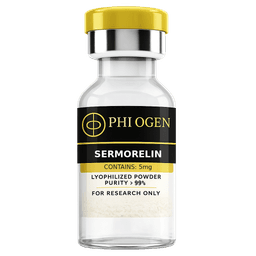
Sermorelin 5mg
GHRH analog that stimulates natural growth hormone production for anti-aging and body composition.
$69.99—Buy NowExplore the Full Recomp Stack
Browse all growth hormone and GLP-1 research peptides, or see our curated research stacks.