
The Deep Science of Collagen and Peptides — How Your Skin Actually Ages
What collagen really is, why it breaks down as you age, and how GHK-Cu, SNAP-8, and the Glow Blend peptides address skin aging at the molecular level — not the marketing level.
What Collagen Actually Is
Collagen is not a single protein — it's a family of 28 identified structural proteins, all sharing the characteristic triple-helix structure that gives them their extraordinary tensile strength. Three polypeptide chains, each running in opposite directions to the others, coil around a central axis like the strands of a rope. This geometry is why collagen can withstand the mechanical stresses of skin stretching, tendon loading, and cartilage compression that would fragment a simpler linear protein. Glycine must occupy every third position in the amino acid sequence (Gly-X-Y repeats) because it is the only amino acid small enough to fit in the interior of the triple helix — a constraint that makes collagen biosynthesis energetically expensive and dependent on specific enzymatic machinery.
For skin specifically, Type I collagen and Type III collagen are the dominant players. Type I provides the primary structural scaffold — it makes up approximately 80% of dermal collagen and is responsible for the mechanical strength and density of skin. Type III collagen, sometimes called "reticular collagen," forms a finer mesh alongside Type I and is particularly abundant in young skin, giving it the elastic softness associated with youthful appearance. Type I and III collagen together make up 70-80% of the dry weight of skin — more than any other structural component.
When a skincare brand says "collagen cream," you should know that topical collagen molecules are too large to penetrate the dermis — it's mostly marketing. The actual biology is more interesting and more mechanistically complex. Native collagen fibrils have molecular weights in the hundreds of kilodaltons — far above the 500-dalton threshold for meaningful skin penetration. What actually works is not topical collagen replacement but rather stimulating the fibroblasts in the dermis to produce more collagen themselves, or inhibiting the enzymes that degrade it. This is exactly where peptide interventions become relevant.
The Collagen Decline Timeline
Dermal collagen production peaks in your early 20s and then begins a slow, relentless decline. The rate is approximately 1-2% per year of dermal collagen content, compounded by parallel increases in the activity of matrix metalloproteinases (MMPs) — the enzyme family that degrades collagen and other extracellular matrix proteins. This means the loss is dual: production decreases and degradation increases simultaneously. By the time visible skin aging becomes apparent — the gradual loss of firmness, the deepening of fine lines, the subtle change in skin texture — the collagen deficit has been accumulating silently for a decade or more. External factors dramatically accelerate the timeline: UV radiation is the most potent single driver of MMP upregulation, followed by smoking (which reduces collagen synthesis and increases MMP-1 activity) and advanced glycation end-products (AGEs) formed by dietary sugar, which cross-link collagen fibers and reduce their elasticity.
The loss is silent for years and then visible all at once — which is one of the reasons people are often caught off guard by skin aging in their 30s and 40s. The biological deterioration started quietly in the mid-20s. By the time it becomes apparent in the mirror, you're addressing a process that has had years of head start. This is why the research on skin aging peptides focuses on interventions that work at the synthesis and degradation level — restoring the production-to-breakdown ratio rather than trying to cosmetically mask the results of an imbalance that has already occurred.
Relative Dermal Collagen Content by Decade
Approximate relative dermal collagen content (normalized to age 20 peak). Rates vary by individual, UV exposure, and lifestyle factors.
GHK-Cu: The 4,000 Gene Solution
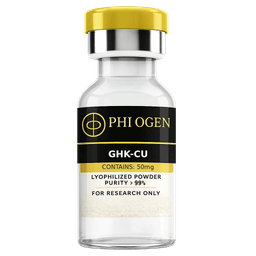
GHK-Cu (glycyl-L-histidyl-L-lysine copper complex) works at the fibroblast level — the cells in the dermis responsible for synthesizing collagen, elastin, and the glycosaminoglycans of the extracellular matrix. The mechanism isn't simple receptor stimulation: GHK-Cu modulates gene expression in fibroblasts, shifting their transcriptional profile toward collagen synthesis while simultaneously inhibiting MMP-1, MMP-2, and MMP-3 — the collagenase enzymes responsible for collagen degradation. This dual action (increase production, reduce breakdown) directly addresses both sides of the collagen decline equation described above, which is why it has attracted sustained research interest since Pickart first characterized it in the 1970s.
Beyond collagen quantity, GHK-Cu upregulates the expression of decorin and versican — proteoglycans that are responsible for the organization of collagen fiber architecture. This distinction matters enormously. "More collagen" and "better-organized collagen" are not the same thing. Young skin doesn't just have more collagen — it has collagen fibers organized in an orthogonal basket-weave pattern that gives skin its mechanical resilience and optical brightness. Aged skin has disorganized, cross-linked fibers that are mechanically weaker and scatter light differently. GHK-Cu's upregulation of the structural proteins that organize collagen architecture addresses this quality dimension, not just the quantity dimension.
The 4,000+ gene modulation finding from gene expression array studies reveals the breadth of GHK-Cu's activity — it touches pathways involved in antioxidant defense (superoxide dismutase upregulation), stem cell activation, anti-inflammatory signaling, nerve regeneration, and vascular repair. The consistent theme across all these pathways is a shift from aged tissue gene expression patterns toward youthful ones. Researchers have noted that GHK-Cu appears to function as a damage signal that coordinates a broad regenerative response — when present at sufficient concentrations, it essentially instructs surrounding tissue to enter a repair and renewal state.
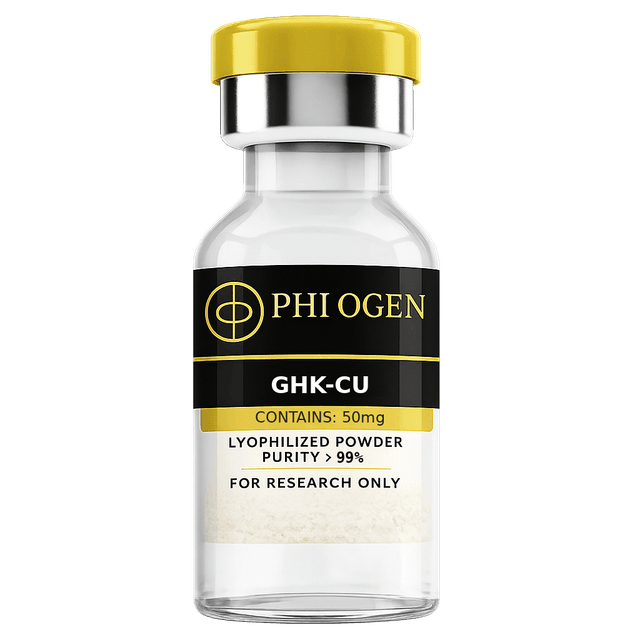
GHK-Cu 50mg
Copper peptide with powerful anti-aging, collagen synthesis, and wound healing properties.
$50.00—Buy NowSNAP-8 — Targeting Expression Lines
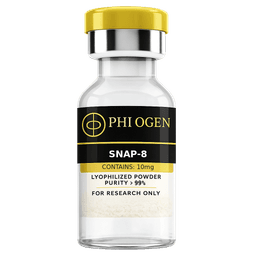
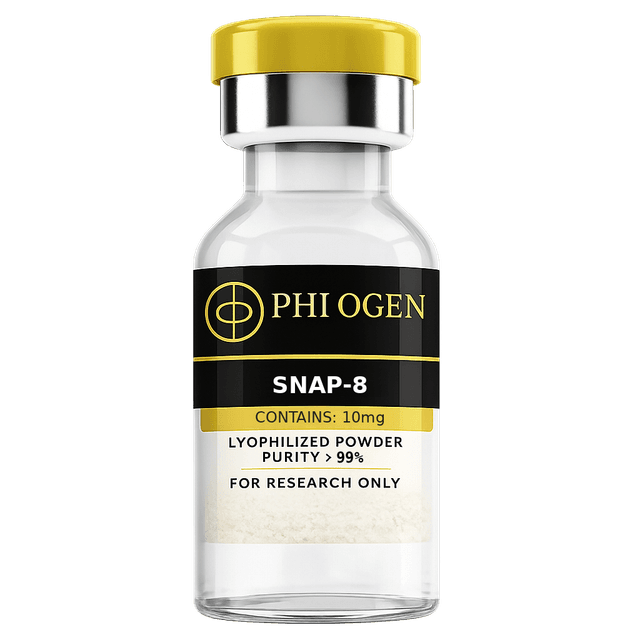
SNAP-8 (acetyl octapeptide-3) takes a completely different approach to skin aging than collagen-synthesis peptides. It targets expression lines — the wrinkles formed by repeated muscle contraction under the skin — rather than the structural degradation of the dermis. The mechanism involves the SNARE protein complex, which governs the fusion of acetylcholine-containing vesicles with the nerve terminal membrane at neuromuscular junctions. SNAP-25 is a key component of this complex; when it is functional, vesicles fuse and acetylcholine is released, triggering muscle contraction. SNAP-8 mimics the N-terminal end of SNAP-25 and competes for binding sites in the SNARE complex, moderately reducing acetylcholine release and therefore moderating — not eliminating — muscle contraction at the targeted site.
It's not going to give you the freezer-face look. SNAP-8 is subtle and gradual — more like turning a dimmer switch than flipping a light off. This is actually a feature rather than a limitation for many research applications: the partial inhibition of neuromuscular signaling at expression line sites reduces the mechanical stress on the collagen matrix from repeated contraction without eliminating normal facial movement. In cosmetic peptide research, SNAP-8 is consistently one of the top-performing active ingredients for periocular (crow's feet) and glabellar (frown line) wrinkle reduction when assessed by profilometry — the objective measurement of skin surface topography.
Glow Blend — Multi-Peptide Formulation
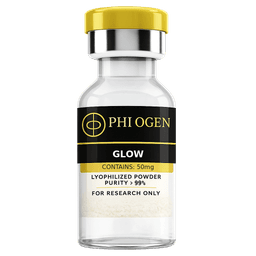
The Glow Blend from Phiogen is a multi-peptide formulation designed for researchers running comprehensive skin aging protocols. Rather than administering individual peptides separately — each with its own reconstitution, dosing calculation, and injection — the Glow Blend combines multiple collagen and skin peptides in a single vial, simplifying the logistics of multi-compound protocols. For preclinical and in vitro research applications where several skin biology pathways need to be addressed simultaneously, a blend formulation reduces both the complexity and the variability of protocol execution.
The practical case for a blended formulation in skin peptide research is straightforward. Collagen synthesis (GHK-Cu), expression line modulation (SNAP-8), and barrier healing (BPC-157) address different skin biology mechanisms and different aspects of the aging phenotype. Running them as separate compounds requires careful timing coordination and increases the total reconstitution and administration burden. A well-formulated blend allows researchers to investigate the combined biological effects of multiple complementary peptides in a single standardized protocol step.
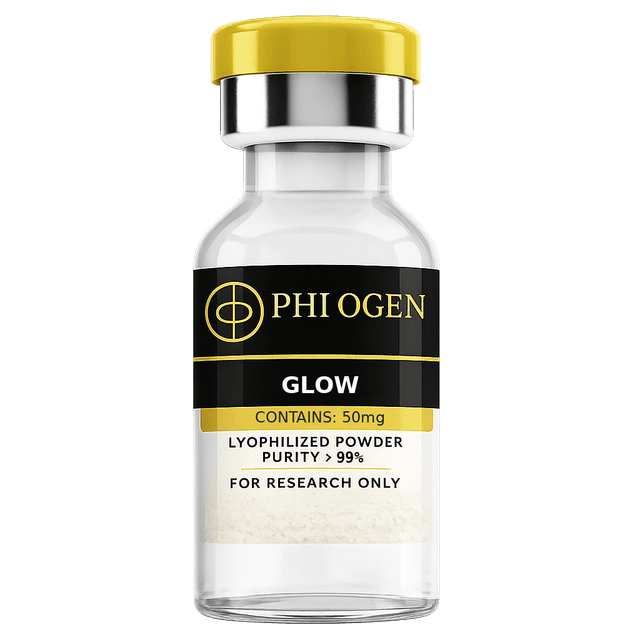
GLOW Blend 50mg
Phiogen GLOW anti-aging skin blend — GHK-Cu, Epithalon, and skin peptides for skin rejuvenation.
$89.99—Buy NowBPC-157 for Skin Healing
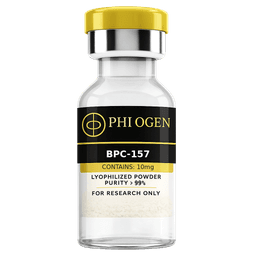
BPC-157's role in skin biology is primarily through its VEGF (vascular endothelial growth factor) upregulation mechanism — it promotes the formation of new capillaries (angiogenesis) in damaged tissue, restoring the blood supply to areas of compromised skin barrier. Healthy dermis requires robust microvascular supply for oxygen, nutrient delivery, and waste removal; in damaged, aged, or inflamed skin, this capillary network is often compromised. BPC-157's ability to drive new capillary formation makes it a valuable component of protocols targeting skin healing and barrier repair rather than cosmetic aging specifically, complementing the collagen-focused mechanisms of GHK-Cu and SNAP-8.
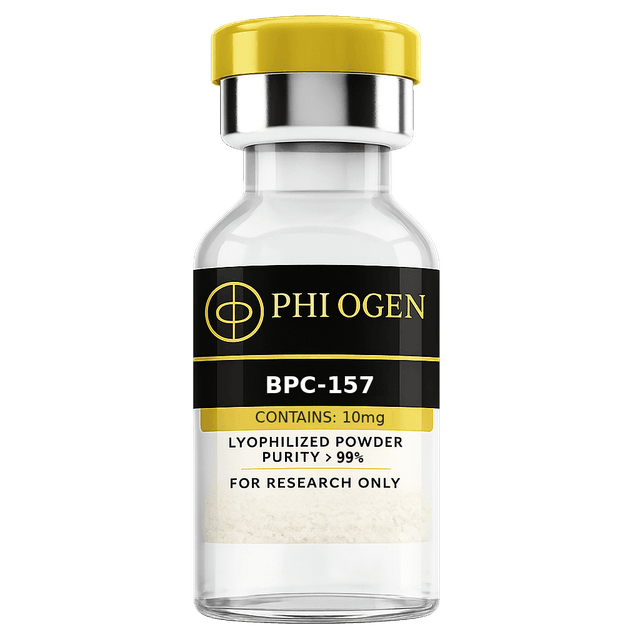
BPC-157 10mg
Body Protection Compound 157 — one of the most studied healing peptides for tissue repair and gut health.
$59.99—Buy NowBuilding a Collagen Protocol
When you look at all these mechanisms together, a layered collagen protocol starts to take shape. GHK-Cu is the foundation — it works at the gene expression level to increase collagen synthesis and inhibit degradation, and its effects build over weeks to months of research use. Daily or every-other-day administration for 12-16 week active cycles is the most commonly cited protocol in the literature. SNAP-8 addresses the neuromuscular dimension — the mechanical stress of expression lines on the collagen matrix — and is most effective when applied to areas of maximum facial movement. These two compounds address completely non-overlapping mechanisms and are straightforwardly complementary.
Epitalon, added quarterly in 10-day pulse cycles, addresses the cellular longevity dimension — extending the replicative lifespan of fibroblasts and other skin cells through telomerase activation, which means the collagen-synthesizing cells remain metabolically capable of responding to GHK-Cu stimulation for longer. BPC-157 rounds out the protocol for any barrier healing or vascular supply needs. The picture that emerges is not a single-ingredient solution but a layered approach that addresses collagen synthesis, collagen architecture, expression line formation, cellular longevity, and skin barrier integrity as distinct and complementary biological targets.
Explore Skin & Collagen Research Peptides
Browse all skin research compounds or read the full guide library.