
Peptides That Support Your Immune System — From T-Cells to Antimicrobials
How Thymosin Alpha-1, LL-37, and the Khavinson bioregulator peptides modulate immune function from the thymus level down to individual cell signaling — and why immune aging may be the most overlooked dimension of biological decline.
Two Immune Systems, One Body
Your immune system is not a single entity — it is two overlapping systems with distinct evolutionary origins, response timescales, and modes of action. The innate immune system is ancient, fast, and non-specific: it responds to broad categories of molecular danger patterns (pathogen-associated molecular patterns, or PAMPs) within minutes to hours and does not distinguish between specific pathogens. Neutrophils, macrophages, natural killer cells, and epithelial barriers form the innate system, and antimicrobial peptides like LL-37 are among its most direct effectors — they disrupt pathogen membranes on contact, without needing to identify a specific threat. Your immune system is running 24/7 — you just don't notice it when it's working right. You notice it when it fails.
The adaptive immune system evolved later and operates on a completely different principle: specificity and memory. When an antigen-presenting cell shows T-cells a fragment of a pathogen, specific T-cell clones expand to mount a targeted response — and retain immunological memory so that subsequent exposures are handled faster and more effectively. This is the system that vaccines leverage, the system that cancer immunosurveillance depends on, and the system that Thymosin Alpha-1 most directly supports. The T-cell response is slower to initiate than the innate response — days rather than hours — but far more precise and capable of generating durable immunological memory.
The interaction between innate and adaptive immunity is dynamic and interdependent. Innate immune activation provides the inflammatory context that determines whether adaptive immune responses are triggered and how strongly they respond. Dendritic cells — bridging cells that sample the innate environment and present antigens to T-cells — are a critical interface between the two systems. Thymosin Alpha-1 acts partly by stimulating dendritic cell maturation, improving the quality of the signal passed from innate to adaptive immune activation. Understanding this architecture is essential for understanding why the immune peptides in this guide work synergistically rather than redundantly.
The Thymus Problem
The thymus gland is where T-cell precursors from bone marrow travel to mature and undergo selection — a rigorous quality-control process that eliminates T-cells that would attack the body's own tissues (positive selection) while preserving those capable of recognizing pathogens. The thymus is essential for building an adaptive immune repertoire, and its output peaks in childhood and early adolescence. What makes it one of the most startling examples of age-related biological decline is its rate of involution: the thymus begins shrinking shortly after puberty, replaced progressively by adipose tissue, and by middle age its functional volume and T-cell output has declined by 70-90% from peak levels. If you imagine your adaptive immune system as an army, the thymus is the training academy. When the academy closes, you're running on the recruits you already have — with no way to refresh or expand the force.
The consequence of thymic involution is immunosenescence — the progressive deterioration of adaptive immune function that is one of the most consistent biomarkers of biological aging. Immunosenescent individuals show reduced T-cell diversity (fewer distinct clones in the repertoire), accumulation of "exhausted" T-cells that no longer respond effectively to stimulation, reduced vaccine efficacy, impaired tumor surveillance, and increased susceptibility to intracellular pathogens. This immune deterioration contributes directly to the increased cancer incidence, infectious disease burden, and inflammatory disease prevalence that characterize aging populations. Compounds that can partially compensate for thymic involution — like Thymosin Alpha-1 — are therefore addressing one of the most mechanistically upstream causes of age-related health decline.
Thymosin Alpha-1 — Thymic Peptide for T-Cell Support
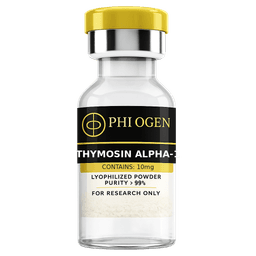
Thymosin Alpha-1 (Tα1) was first isolated from bovine thymus extracts by Allan Goldstein and colleagues in the 1970s — part of a broader effort to identify the active immunological components of thymosin fraction 5, a thymic extract that had shown immune-enhancing properties in animal models. The synthetic version of the 28-amino-acid peptide is now registered as Zadaxin (thymalfasin) and has received regulatory approval for clinical use in over 35 countries — primarily for chronic hepatitis B and C treatment, and as an adjuvant for immunocompromised patients. This clinical regulatory history gives Tα1 a more robust human safety and efficacy dataset than most research peptides in the longevity and immune space.
The mechanisms of Thymosin Alpha-1 are multiple and interconnected. It stimulates dendritic cell maturation — improving the antigen presentation quality that bridges innate and adaptive immunity. It promotes T-cell differentiation from precursor cells in the thymus and peripheral lymphoid tissue. It enhances NK cell activity, which is critical for early tumor cell recognition and intracellular pathogen clearance. And it modulates cytokine production — particularly increasing IL-2 production, which is the primary growth factor for T-cell proliferation. In aging research models, Tα1 administration has been shown to restore T-cell responses that had become blunted with age, partially reversing the functional immunosenescence phenotype without the toxicity associated with cytokine therapy.
The immunosenescence application of Tα1 is perhaps the most compelling from a longevity research perspective. A 2021 publication in Nature Aging identified thymic involution as a potentially targetable driver of age-related immune dysfunction, and Tα1's ability to support T-cell output independent of full thymic architecture places it in a unique position as an immune longevity compound. For aging research protocols, Tα1 is studied in 4-12 week courses that mimic the "booster" course design used in the Zadaxin clinical literature — providing periodic immune function support rather than continuous pharmacological maintenance.
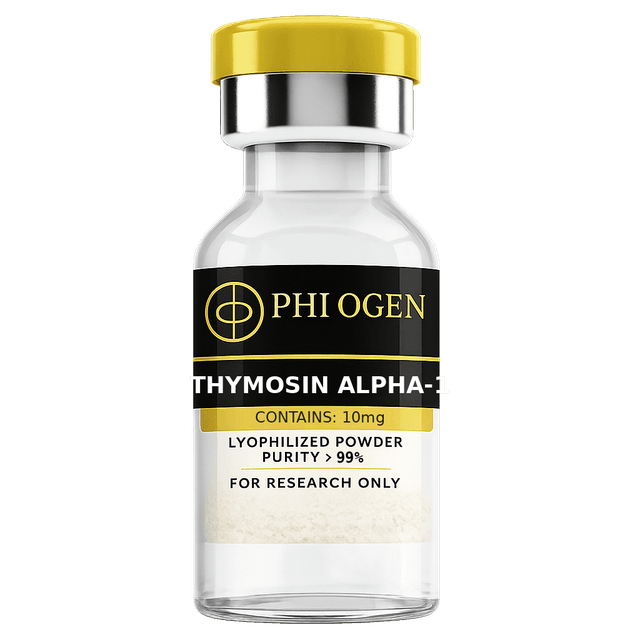
Thymosin Alpha-1 10mg
Thymic peptide for T-cell activation, immune enhancement, and adaptive immunity.
$119.99—Buy NowLL-37 — Your Body's Built-In Antimicrobial
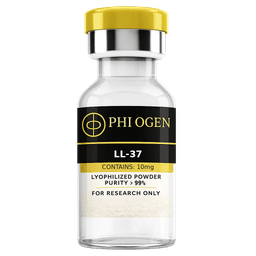
LL-37 is the only cathelicidin expressed in humans — a member of the ancient antimicrobial peptide family that forms one of the most conserved components of innate immune defense across vertebrate biology. It is produced by neutrophils, macrophages, mast cells, NK cells, and epithelial cells at sites of infection or injury. Its antimicrobial mechanism is direct membrane disruption: the amphipathic helical structure of LL-37 allows it to intercalate into bacterial, fungal, and viral lipid membranes, forming pores that disrupt membrane integrity and kill the pathogen without requiring receptor-mediated signaling. This mechanism is effective against gram-positive and gram-negative bacteria alike, and the structural basis for resistance development is considerably higher than for most conventional antibiotics.
LL-37's role extends far beyond direct antimicrobial activity — it functions as a chemokine that recruits neutrophils, monocytes, and T-cells to sites of infection or damage, amplifying the immune response. It also modulates inflammatory signaling: at low concentrations associated with wound healing, LL-37 suppresses excessive LPS-mediated inflammatory signaling, reducing the risk of inflammatory collateral damage. At higher concentrations in active infection contexts, it amplifies the recruitment of immune cells and activates pattern recognition receptor signaling. This contextual modulation — anti-inflammatory in repair contexts, pro-inflammatory in infection contexts — makes LL-37 a sophisticated immune regulator rather than a simple antimicrobial. Research into LL-37 for chronic low-grade infections, wound healing, and inflammatory skin conditions (particularly rosacea, where LL-37 dysregulation has been identified as a pathological driver) is active across multiple clinical research programs.
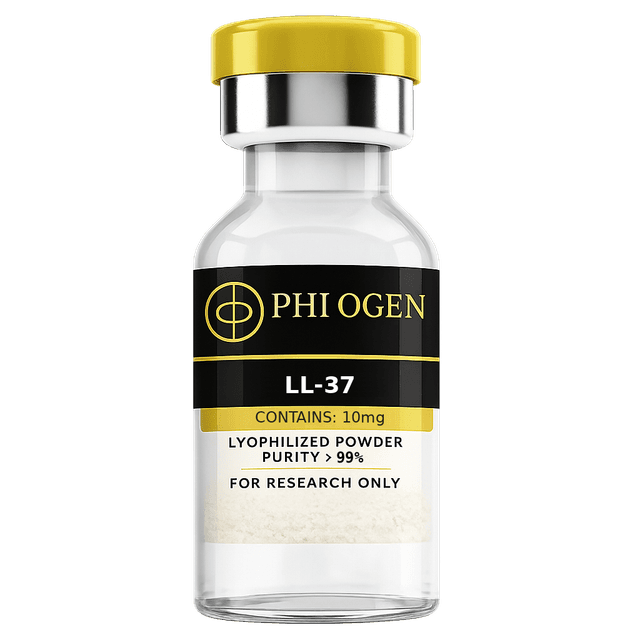
LL-37 10mg
Human cathelicidin antimicrobial peptide with immune modulation and wound healing properties.
$99.99—Buy NowImmune Modulation Layers
Innate Immunity — Fast, Non-Specific
First responder defense: pattern recognition, antimicrobial barriers, rapid inflammatory signaling
Adaptive Immunity — Slow, Specific
Memory-based targeted defense: T-cell surveillance, antigen-specific responses
Cellular Longevity
Long-term immune cell health: telomere integrity, mitochondrial function in immune cells
Thymogen and the Khavinson Bioregulators
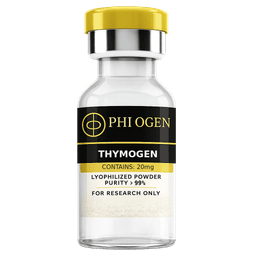
Thymogen is a synthetic dipeptide (Glu-Trp) developed by the Khavinson group as a minimal bioregulator targeting thymic tissue specifically. The Khavinson bioregulator approach is based on the hypothesis that organs produce specific short peptides that serve as autocrine and paracrine regulators of their own cellular activity — and that these peptides can be administered exogenously to stimulate organ-specific regeneration when the organ's own regulatory capacity declines with age. Thymogen, derived from the analysis of thymic peptide fractions, has been studied in Russia and Eastern Europe in clinical contexts including chemotherapy-induced immunosuppression, geriatric immune support, and viral infection recovery. The proposed mechanism is direct stimulation of thymic epithelial cells and T-cell progenitors, complementing Thymosin Alpha-1's broader immune activation effects.
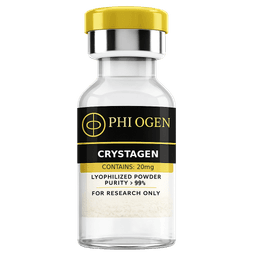
Crystagen (Lys-Glu-Asp) is another Khavinson bioregulator originally derived from retinal and nervous system tissue analysis. While its primary research application has been in retinal cellular support and neurological tissue protection, it represents the broader bioregulator principle — short tissue-derived peptides providing organ-specific cellular stimulation. For immune researchers, the most relevant aspect of Crystagen is its role in the neuro-immune interface research, given the dense bidirectional communication between the nervous system and immune function. The Khavinson group has published extensively on both compounds across several decades, providing a larger research base than most Western researchers are aware of, given the historical publishing barriers between Eastern European and Western scientific literature.
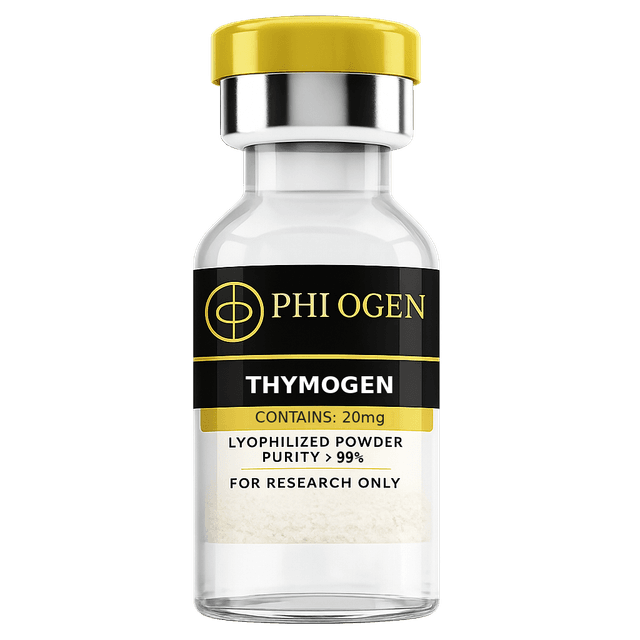
Thymogen 20mg
Thymus dipeptide bioregulator for immune system modulation and T-cell support.
$79.99—Buy Now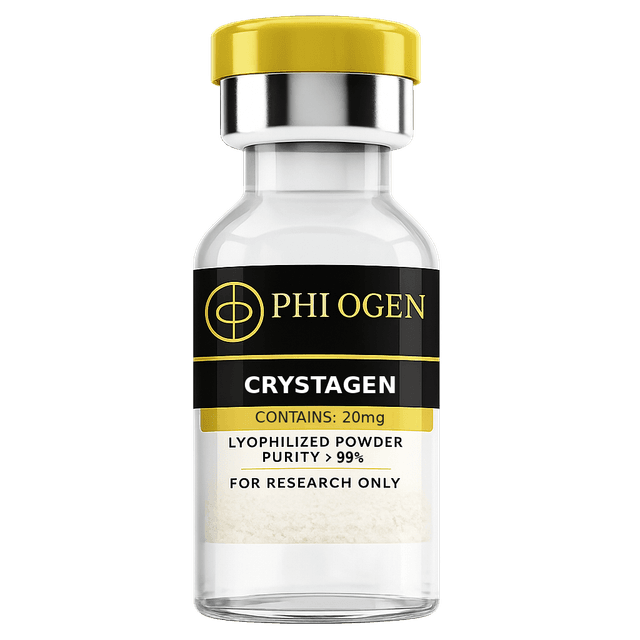
Crystagen 20mg
Khavinson eye lens peptide bioregulator for ocular tissue and vision support.
$79.99—Buy NowWhen to Run Immune Peptides
The research literature suggests two distinct use contexts for immune peptides. The first is seasonal and preventive: Thymosin Alpha-1 is particularly well-suited to autumn administration, running a 4-8 week course before the winter respiratory virus season when adaptive immune function is most challenged. The Zadaxin clinical data shows measurable improvements in T-cell response and vaccine adjuvant effects within this timeframe. Thymogen can be used in conjunction for additional thymic support during these seasonal courses. LL-37 is more situational — it's particularly relevant for researchers studying wound healing contexts or chronic low-grade infection models where the innate antimicrobial and immune modulation properties are directly relevant to the research question.
The second context is as part of an ongoing anti-aging protocol where immunosenescence is addressed alongside other hallmarks of aging. In this framework, Thymosin Alpha-1 runs as a quarterly course (rather than annual), GHK-Cu provides its anti-inflammatory and tissue regeneration support on a more continuous basis, and Epitalon's pulsed cycles address the deeper cellular longevity of immune cell precursors. These are research-framework frameworks drawn from published study designs — not prescriptions or medical recommendations. All these compounds remain research-only, and the protocols described reflect the preclinical and early clinical literature rather than established standard of care. Any researcher working with immune-modulating compounds should do so within a carefully controlled protocol with appropriate baseline measurements and monitoring.
Explore Immune Research Peptides
Browse all immune support compounds or explore the full immune category.