
The Anti-Aging Peptide Protocol — Targeting the Biology of Aging
Telomeres, mitochondrial decline, collagen loss, immune senescence — the hallmarks of aging and which research peptides address each one at the molecular level.
Why We Age: The Short Version
The hallmarks of aging framework, first published by Carlos López-Otín and colleagues in Cell in 2013 and updated in 2023, provides the most rigorous scientific accounting of why biological organisms decline over time. Rather than treating aging as a single process, it identifies a set of interconnected cellular and molecular failures that each contribute to organismal decline — and that each amplify the others in a cascade pattern. Understanding these hallmarks is essential for understanding why specific peptides have been studied as interventions in aging research.
Aging isn't a single disease — it's a cascade of failures, each one making the next slightly more likely. Telomere shortening limits how many times cells can divide before they become senescent or apoptotic. Mitochondrial dysfunction reduces cellular energy production and increases oxidative stress, damaging DNA and proteins. Cellular senescence accumulates — old, dysfunctional cells that refuse to die and instead secrete inflammatory cytokines that damage neighboring tissue. Epigenetic drift causes gene expression patterns to shift away from the youthful patterns that maintain tissue function. Stem cell exhaustion reduces the body's regenerative capacity. Altered intercellular communication drives chronic low-grade inflammation — "inflammaging" — that undermines organ function across the board.
What makes this framework scientifically powerful is that it provides specific, testable targets. You don't have to address "aging" as an abstract concept — you can target telomere maintenance, mitochondrial function, or senescent cell clearance as discrete research questions. Peptides like Epitalon, SS-31, GHK-Cu, and Thymosin Alpha-1 each have mechanistic evidence connecting them to specific hallmarks of aging, which is why they appear in geroscience research rather than only in cosmetic or performance contexts.
Epitalon — The Telomere Peptide
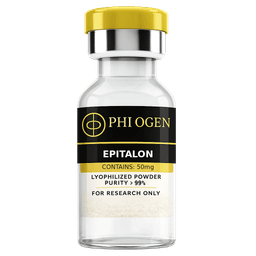
Epitalon (Ala-Glu-Asp-Gly) is a synthetic tetrapeptide discovered and extensively studied by Vladimir Khavinson at the Saint Petersburg Institute of Bioregulation and Gerontology over several decades of research. Khavinson identified it as the active component of epithalamin — a bovine pineal gland extract that had shown life-extension effects in animal models. The synthetic version, Epitalon, has been studied in cell culture, animal models, and limited human clinical trials, with the most intriguing findings centered on its ability to activate telomerase — the enzyme responsible for maintaining and extending telomere length.
Telomeres are the protective caps at the ends of chromosomes, often compared to the plastic tips on shoelaces. Each time a cell divides, telomeres shorten slightly — a phenomenon described by the Hayflick limit, which defines the maximum number of times a normal human cell can divide before entering senescence. When telomeres become critically short, cells either stop dividing (senescence) or die (apoptosis). Telomerase is the enzyme that can add telomeric repeats back onto chromosome ends, counteracting this shortening. Most adult somatic cells have low to negligible telomerase activity — it's primarily active in stem cells and germ cells. Epitalon research has demonstrated its ability to upregulate telomerase expression in aged human cells, potentially extending the replicative lifespan of those cells.
In practice, Epitalon research protocols typically use 10-day cycles of daily administration, repeated 2-4 times per year — a pulsed approach rather than continuous use. This mirrors the cyclical patterns observed in the most cited Khavinson research and is thought to avoid potential receptor desensitization. The compound has an excellent safety profile in published research, with no significant adverse effects reported across the decades of clinical investigation in Russia and Eastern Europe, where it has been more extensively studied than in Western research contexts.
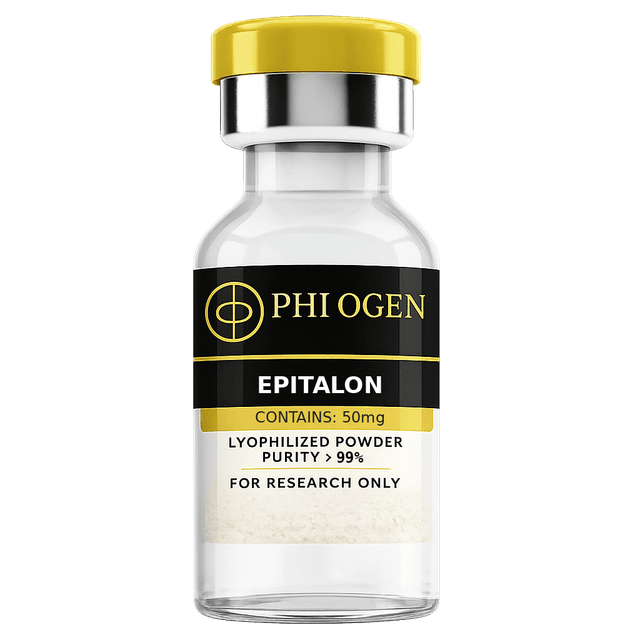
Epitalon 50mg
Tetrapeptide studied for telomere elongation, sleep quality, and longevity mechanisms.
$139.99—Buy NowHallmarks of Aging vs Research Peptides
SS-31 — The Mitochondrial Targeting Peptide
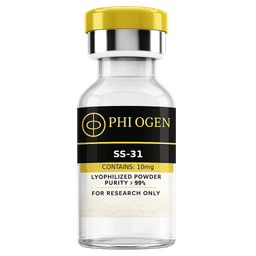
SS-31 (also known as Szeto-Schiller peptide 31, or Elamipretide) is a tetrapeptide with a remarkable property: it selectively accumulates in the inner mitochondrial membrane at concentrations up to 1,000-fold higher than in the rest of the cell. This is achieved through its alternating aromatic-cationic amino acid sequence, which allows it to associate with cardiolipin — a phospholipid found almost exclusively in the inner mitochondrial membrane that is essential for the proper function of the electron transport chain. By binding cardiolipin, SS-31 stabilizes cristae architecture and maintains the structural integrity of the ATP synthase complexes that produce cellular energy.
Mitochondrial dysfunction is one of the most consistent and universal features of biological aging. As mitochondria age, their electron transport chain becomes leaky — electrons escape from the respiratory chain and react with oxygen to form reactive oxygen species (ROS) rather than being channeled into ATP production. These ROS cause oxidative damage to mitochondrial DNA, membrane lipids, and proteins in a self-amplifying cycle: damaged mitochondria produce more ROS, which causes more damage. SS-31's mechanism of stabilizing the inner membrane reduces this electron leakage at the source, lowering ROS production and improving ATP output simultaneously. This makes it particularly interesting as a compound that could address the root cause of mitochondrial aging rather than just scavenging the resulting oxidative products.
Research on SS-31 spans heart failure (cardiac mitochondrial rescue), kidney disease (renal tubular mitochondrial protection), muscular dystrophy, and age-related frailty. The most compelling aging-relevant studies show that SS-31 administration in aged animals partially restores mitochondrial function to parameters seen in younger animals — suggesting it is addressing genuine age-related mitochondrial decline rather than simply acting as an antioxidant. Phase 1 and Phase 2 human clinical trials have been completed in heart failure populations with favorable safety data, giving it one of the stronger clinical research foundations of any longevity peptide.
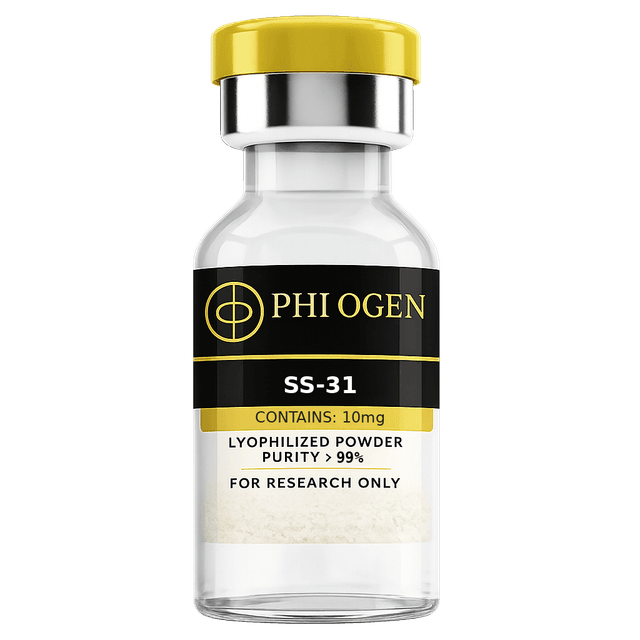
SS-31 10mg
Mitochondria-targeted antioxidant peptide for energy restoration and cellular protection.
$99.99—Buy NowGHK-Cu and the Gene Expression of Youth
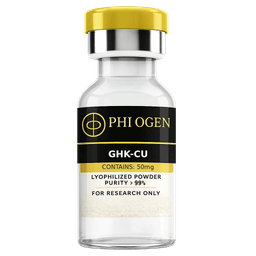
Loren Pickart's discovery that the plasma tripeptide GHK (glycyl-L-histidyl-L-lysine) declines dramatically with age — from 200 ng/mL in young adults to 80 ng/mL by age 60 — and that supplementing it reverses many age-associated gene expression changes opened a new research direction that has only grown more compelling with modern genomic tools. When Pickart and colleagues used gene expression arrays to systematically map how GHK-Cu affects cell biology, they found it modulates the expression of over 4,000 human genes — shifting gene expression patterns in fibroblasts, immune cells, and organ tissue away from aged patterns and toward the patterns characteristic of younger tissue. This is not a single-pathway drug; it's closer to a broad epigenetic reset that touches dozens of biological processes simultaneously.
The practical manifestations of this gene expression shift extend well beyond the skin applications for which GHK-Cu is best known in commercial contexts. In organ function studies, GHK-Cu has been found to reduce fibrosis in lung, kidney, and liver tissue — fibrosis being an age-associated process where functional organ cells are progressively replaced by non-functional collagen scar tissue. It upregulates superoxide dismutase and other antioxidant enzymes. It activates genes involved in stem cell differentiation and tissue regeneration. The molecule functions as a biological signal of tissue damage and regenerative capacity — when it is present at youthful concentrations, it appears to keep cells in a regenerative state rather than a senescent one.
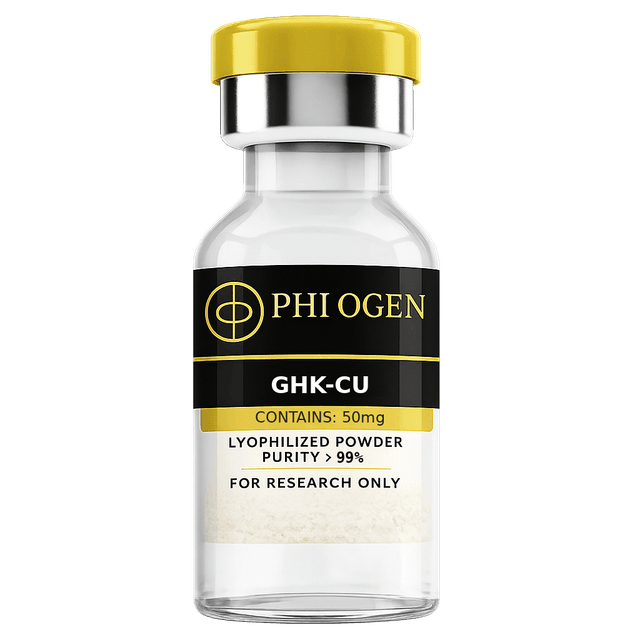
GHK-Cu 50mg
Copper peptide with powerful anti-aging, collagen synthesis, and wound healing properties.
$50.00—Buy NowThymosin Alpha-1 and Immune Aging
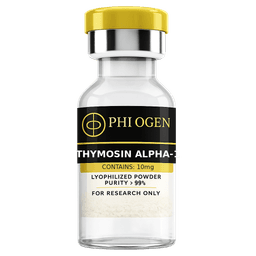
The thymus gland is one of the most dramatically age-affected organs in the human body. It reaches its peak size around puberty and begins involuting — shrinking and being replaced by adipose tissue — shortly afterward. By middle age, thymic output of naive T-cells has declined by 70-90% from peak levels. Since T-cells are the core of adaptive immune surveillance — the system that recognizes and destroys cancer cells, viral infections, and intracellular pathogens — this decline represents one of the most consequential aspects of immune aging. Thymosin Alpha-1, first isolated from bovine thymus by Allan Goldstein in the 1970s and approved as Zadaxin in over 35 countries for hepatitis treatment, has been studied for its ability to partially compensate for this thymic involution.
The mechanism of Thymosin Alpha-1 involves stimulating dendritic cell maturation, promoting T-cell differentiation from precursor cells, and enhancing NK (natural killer) cell activity — all elements of both adaptive and innate immune function. In aging models, Tα1 administration has been shown to restore T-cell proliferative responses and improve immune surveillance metrics. The compound is particularly relevant for the concept of immunosenescence — the gradual deterioration of immune function with age that is associated with increased susceptibility to infections, reduced vaccine responses, and impaired cancer surveillance. For a longevity protocol, Thymosin Alpha-1 addresses an aspect of aging — immune system deterioration — that is often overlooked compared to the more visible metrics of body composition and skin aging.
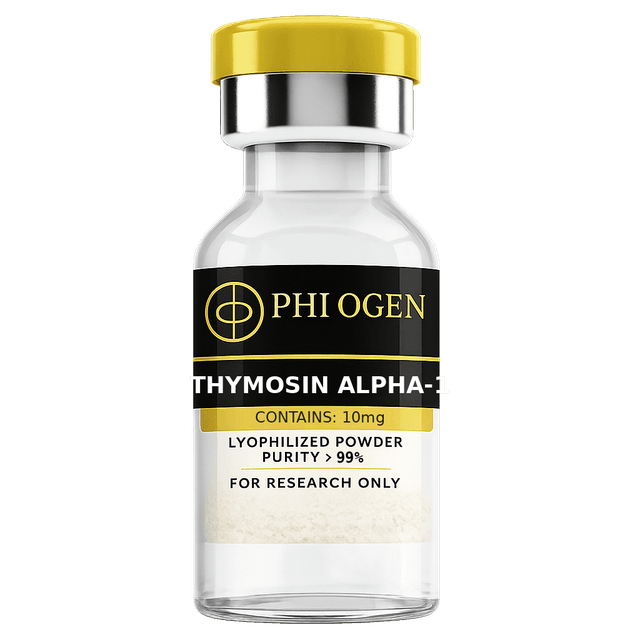
Thymosin Alpha-1 10mg
Thymic peptide for T-cell activation, immune enhancement, and adaptive immunity.
$119.99—Buy NowA Longevity Protocol Framework
The longevity research literature suggests a layered, cyclical approach to peptide protocols rather than continuous daily use of every compound. Epitalon is typically run in pulsed 10-day cycles, 2-4 times per year, given its mechanism of periodically stimulating telomerase activity rather than requiring constant presence. GHK-Cu, with its broad gene expression modulation and collagen synthesis support, is more commonly studied in daily or every-other-day protocols for 12-16 week active phases. SS-31, like Epitalon, is often used in shorter intensive cycles given the potency of its mitochondrial effects. Thymosin Alpha-1 is frequently studied in 4-12 week courses aligned with seasonal immune preparation — autumn being the most commonly cited timing in clinical research designs.
The compounds in this framework do not compete with each other — they address distinct hallmarks through distinct mechanisms, making them complementary rather than redundant. Layering telomere support (Epitalon), mitochondrial protection (SS-31), gene expression modulation (GHK-Cu), and immune support (Thymosin Alpha-1) theoretically addresses aging at four independent biological levels simultaneously. The practical challenge is the research complexity of running multi-peptide protocols and accurately attributing observed changes to specific compounds. This is an active area of geroscience research, and the protocols described here reflect the current state of published literature, not established clinical guidelines.
Explore the Longevity Stack
Browse all anti-aging research peptides or see our curated longevity stacks.