
Pre-Workout Peptides — Beyond Caffeine and Creatine
How AICAR, AOD9604, GHRP-2, and growth hormone peptides are studied as performance-enhancing tools that operate on fundamentally different mechanisms than conventional pre-workout supplements.
The Limits of Standard Pre-Workout
If you've been training for more than three years, you know the caffeine spike stopped doing much a long time ago. What's happening isn't psychological tolerance alone — your adenosine receptors have upregulated in response to chronic caffeine exposure, and the acute alertness boost has been largely neutralized. Standard pre-workout supplements work on a narrow band of mechanisms: caffeine for central nervous system stimulation, beta-alanine for buffering lactic acid, creatine for phosphocreatine replenishment, citrulline for transient nitric oxide-mediated vasodilation. These are legitimate mechanisms, and they work for novice and intermediate trainees. But they don't address the deeper physiological constraints on performance — the hormonal environment, the metabolic substrate availability, or the mitochondrial density that ultimately determines work capacity.
Peptides for performance target fundamentally different mechanisms. Growth hormone secretagogues (GH axis peptides) work by amplifying the natural GH pulse that exercise itself triggers — essentially pre-loading the hormonal response to training so that the anabolic window after your workout is amplified rather than modest. Fat oxidation peptides like AOD9604 prime adipocytes for lipolysis before training begins, so your body is already pulling from fat stores when glycolytic demand ramps up. AICAR mimics the cellular energy state of vigorous exercise by directly activating AMPK — the master metabolic switch — before you ever touch a barbell. These compounds don't give you a focus boost; they change what your physiology is capable of.
AICAR — Training Your Metabolism Without Training
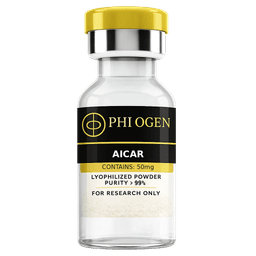
AICAR (5-aminoimidazole-4-carboxamide ribonucleotide) is an intermediate in de novo purine synthesis that accumulates naturally in cells during ischemia and vigorous aerobic exercise when AMP levels rise. When administered exogenously, AICAR acts as a direct activator of AMP-activated protein kinase (AMPK) — the central energy sensor of every cell that monitors the AMP/ATP ratio and triggers metabolic adaptations when energy is scarce. AMPK is the molecular link between physical exercise and the metabolic benefits of training: it gets activated by exercise and switches cells from energy-storing anabolic mode into energy-burning catabolic mode. AICAR essentially tells your cells they have been exercising, in terms of gene expression, even when they haven't.
The downstream effects of AMPK activation are substantial. AMPK phosphorylates and inactivates ACC (acetyl-CoA carboxylase), reducing de novo fatty acid synthesis and simultaneously activating CPT1 to increase fatty acid transport into mitochondria for beta-oxidation. It activates PGC-1α — the master regulator of mitochondrial biogenesis — driving the creation of new mitochondria in skeletal muscle over time. It promotes GLUT4 translocation to the cell surface, increasing glucose uptake into muscle independent of insulin. The net result of all these coordinated changes is a cell that burns fat more efficiently, produces more energy, and adapts to higher metabolic demands over time — exactly the adaptations that athletes spend years building through endurance training.
The famous "exercise-in-a-bottle" characterization of AICAR comes from a landmark 2008 paper by Narkar and colleagues in Cell, which showed that AICAR alone (without any training) improved running endurance in mice by 44%, and that combining AICAR with exercise training produced a 75% improvement — larger than either alone. The mice that received AICAR without training developed the gene expression signature of trained muscles: higher mitochondrial density, greater fat oxidation enzyme activity, and improved metabolic flexibility. These findings were significant enough that AICAR was added to the World Anti-Doping Agency prohibited list in 2011, specifically for in-competition use, well before it reached widespread research compound availability.
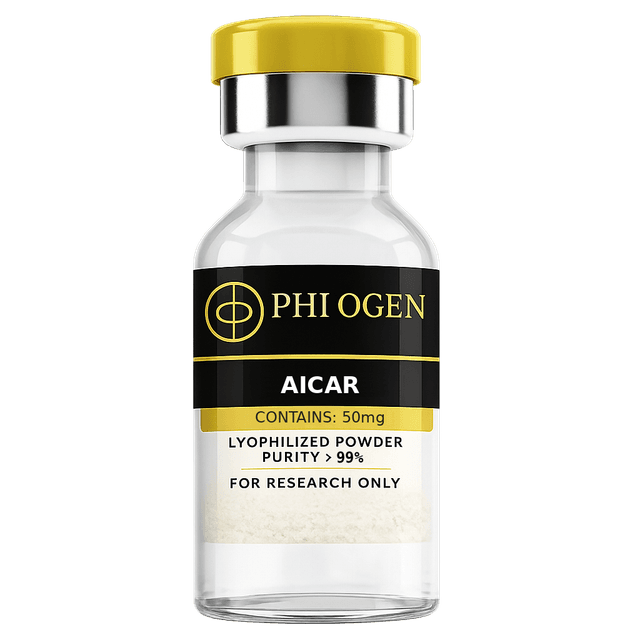
AICAR 50mg
AMPK activator — exercise-mimetic compound for endurance, fat burning, and metabolic health.
$69.99—Buy NowAOD9604 — GH Fragment for Targeted Fat Oxidation
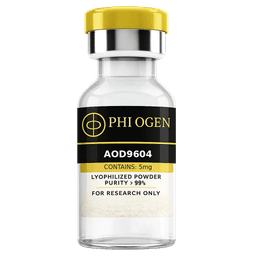
AOD9604 is fragment 176-191 of growth hormone — specifically the carboxy-terminal region of the GH molecule that is responsible for its lipolytic activity, cleanly separated from the amino-terminal portion that mediates the IGF-1-elevating and growth-promoting effects of full GH. By activating beta-3 adrenergic receptors on adipocytes, AOD9604 directly initiates lipolysis in fat cells — the same receptor pathway that catecholamines (epinephrine, norepinephrine) activate during exercise or stress to mobilize fatty acids as fuel. For pre-workout timing, administering AOD9604 approximately 30 minutes before training primes adipocytes to release stored fatty acids into circulation before exercise demand drives the body toward glycolytic pathways.
What makes AOD9604 particularly interesting for training research is its lack of effect on IGF-1 and insulin sensitivity — the two major concerns with full GH peptide use in performance contexts. Clinical trials conducted by Metabolic Pharmaceuticals across several thousand participants showed no effect on fasting glucose, no IGF-1 elevation, and no growth plate stimulation at therapeutic doses. This specificity allows researchers to study the lipolytic component of GH signaling in isolation, without the complexity of full GH axis activation. The visceral fat selectivity of AOD9604 — it preferentially targets intra-abdominal fat depots due to the higher beta-3 receptor density in visceral versus subcutaneous adipose tissue — makes it particularly relevant for the body composition improvements that serious athletes prioritize.
GHRP-2 — GH Pulse Before Training
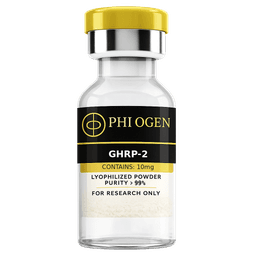
GHRP-2 (Growth Hormone-Releasing Peptide 2) is one of the earliest and most potent GH secretagogues characterized in research — it triggers a robust GH pulse within 30-60 minutes of administration by activating the GHS-R1a (ghrelin receptor) on pituitary somatotrophs. For training research, the timing strategy is straightforward: administering GHRP-2 approximately 60 minutes before training allows the resulting GH pulse to overlap with the anabolic window of the workout and the post-exercise recovery period. Growth hormone during this window supports fat mobilization for fuel during training and stimulates IGF-1 production and muscle protein synthesis in the post-workout recovery phase.
The tradeoff with GHRP-2 versus newer, more selective GH secretagogues is its effect on cortisol and prolactin. At higher doses, GHRP-2 elevates both hormones — cortisol, because the ghrelin receptor pathway has connections to the HPA axis, and prolactin through hypothalamic dopamine suppression. Both of these secondary effects are counterproductive for training outcomes: cortisol is catabolic and promotes visceral fat accumulation, while prolactin dysregulation affects recovery and body composition. For these reasons, GHRP-2 is typically used at lower research doses (100-150 mcg) where the GH response is substantial but the cortisol and prolactin elevation is minimal — the dose-response curves for these effects are different enough that careful dose management can preserve selectivity.
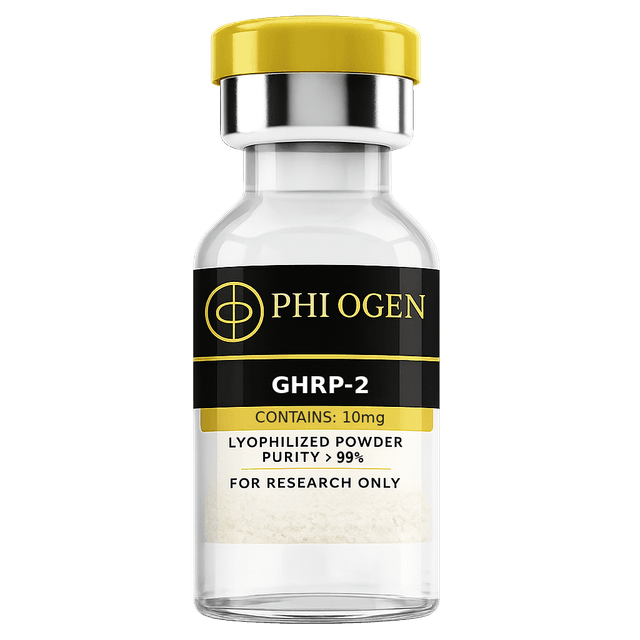
GHRP-2 10mg
Potent growth hormone releasing peptide 2 — strong GH secretagogue with immune and appetite effects.
$49.99—Buy NowPeptide Timing Chart — Relative to Workout
Ipamorelin vs GHRP-2 for Pre-Workout
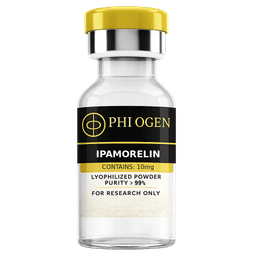
The choice between GHRP-2 and Ipamorelin for pre-workout GH stimulation comes down to a fundamental trade-off between pulse magnitude and hormonal selectivity. GHRP-2 produces a larger, more acute GH spike — particularly at doses above 150 mcg — but at the cost of meaningful cortisol and prolactin co-elevation, especially at higher doses. Ipamorelin is considered the most selective GH secretagogue studied to date: it produces a robust GH pulse with negligible effect on cortisol, prolactin, TSH, FSH, or LH, even at doses significantly above the standard research range. For athletes where hormonal cleanliness is a priority — particularly those concerned about cortisol's catabolic effects on muscle tissue and visceral fat accumulation — Ipamorelin is the more precise instrument.
For pre-workout specifically, the practical distinction is this: GHRP-2 gives you a stronger acute GH pulse, which may be preferable if maximum GH output for a single training session is the primary objective. Ipamorelin gives you a cleaner, more physiologically appropriate pulse that can be used more frequently without the accumulating hormonal noise of cortisol elevation — making it better suited for daily or 5-days-per-week training protocols. Many advanced research protocols combine both with CJC-1295 on lower-intensity days while using GHRP-2 specifically on high-intensity training days where the stronger acute pulse is most relevant.
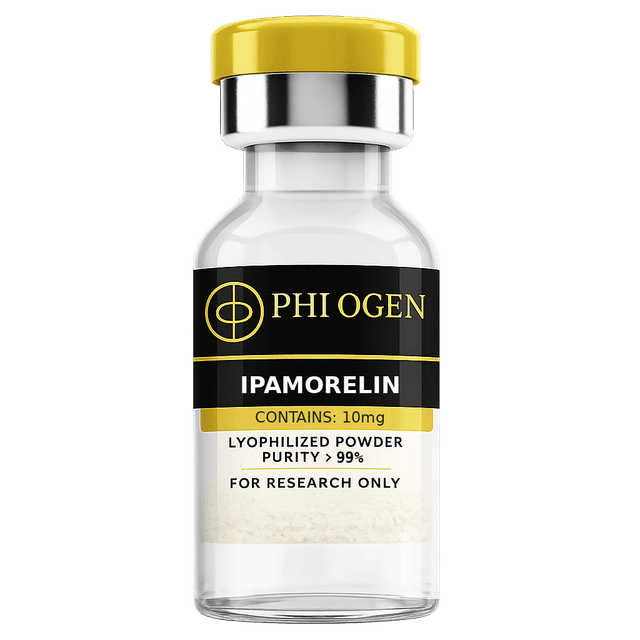
Ipamorelin 10mg
Selective GH secretagogue with minimal side effects — the cleanest GHRP available.
$59.99—Buy NowRecovery Is Where Performance Is Won
All these pre-workout compounds mean nothing if recovery is the limiting factor. The adaptation to training happens not during the workout but in the hours and days afterward — during tissue repair, protein synthesis, and neural adaptation. BPC-157 post-training, GH pulse optimization pre-sleep, and adequate protein are the other half of any serious research protocol. If you're exploring pre-workout peptides, the healing and recovery peptides are the logical next read.
Explore All Performance Peptides
Browse the full catalog or see our curated training and performance stacks.