
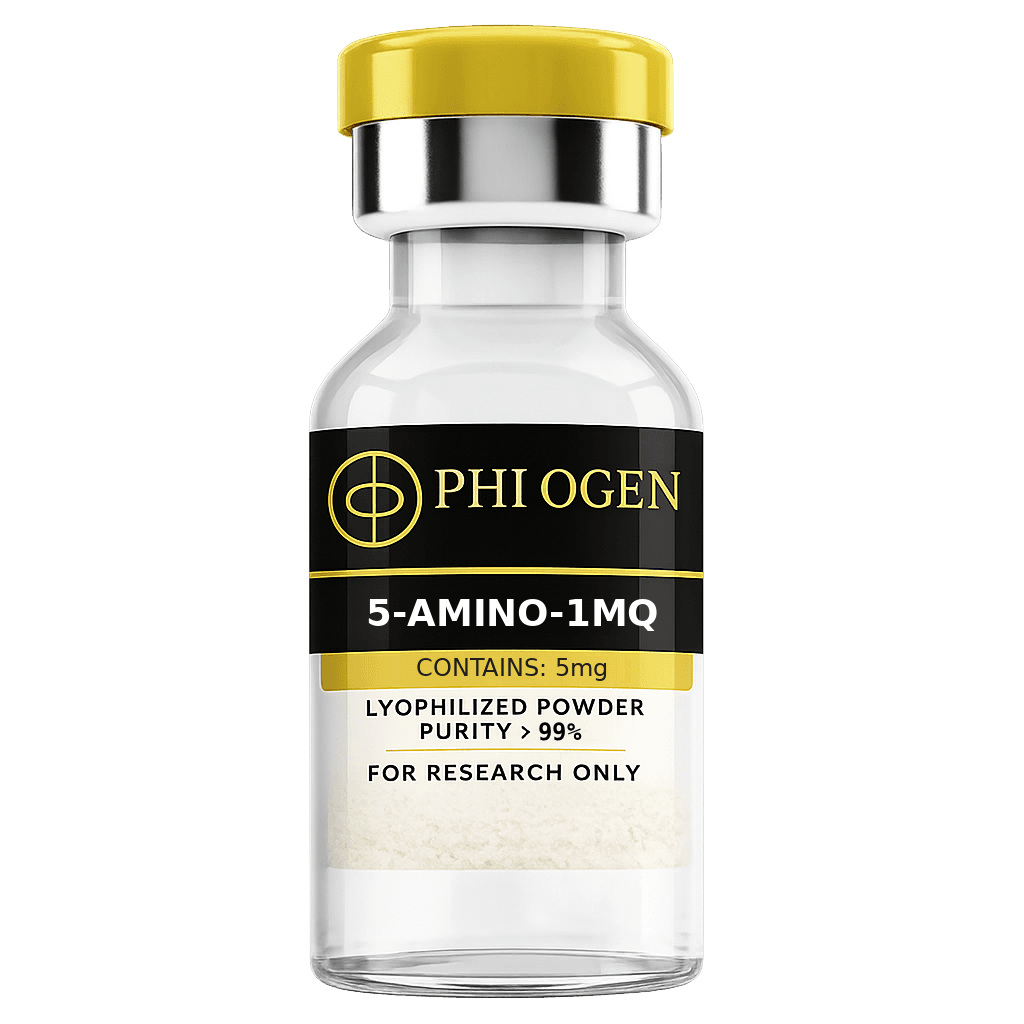
5-Amino-1MQ 5mg
5-Amino-1MQ 5mg — NNMT inhibitor entry size for fat loss and metabolic research.
5-Amino-1MQ 5mg — Metabolic Research Overview
Across metabolic and incretin research, 5-Amino-1MQ inhibits nicotinamide N-methyltransferase (NNMT) to activate metabolic pathways promoting fat loss while preserving lean mass. The 5mg size is ideal for initial dose-finding protocols or stacking with other metabolic compounds.
Primary research applications for 5-Amino-1MQ 5mg include nnmt inhibition for fat metabolism, lean muscle preservation, insulin sensitivity improvement, entry supply for 5-amino-1mq protocols. As a Metabolic compound, it is studied in the context of metabolic, fat loss, nnmt — areas where its mechanism of action has the most direct relevance in preclinical models.
In standard research protocols, 5-Amino-1MQ 5mg is administered at 50–100 mg orally 1–3x daily, with a half-life of Unknown. This product is supplied by Phiogen as lyophilized powder with independent third-party Certificate of Analysis (COA) documentation confirming 99%+ purity and correct molecular identity on every batch. 5-Amino-1MQ 5mg is sold strictly for laboratory and educational use only — it is not FDA-approved for human therapeutic use and is not intended for human consumption, clinical application, or use in animals.
Effectiveness Profile
Relative effectiveness scores derived from published preclinical literature across key endpoints.
Scores are qualitative aggregates from animal and in vitro studies and are not a medical claim. For educational purposes only.
Reconstitution Calculator
Calculate exact BAC water volume and dose measurements for 5-Amino-1MQ 5mg.
For laboratory use only. This calculator is a reference tool — verify all calculations before use. Always use sterile technique with bacteriostatic water and sterile syringes.
Applications & Benefits
Dosing Protocol
Dosing information is derived from published animal studies and is provided for educational purposes only.
Effect Timeline
Expected milestones based on published preclinical data.
Metabolic receptor engagement begins. Early appetite modulation and glucose sensitivity improvements detectable.
Progressive improvements in glucose and insulin dynamics. Meaningful weight and fat reduction begins.
Visceral fat reduction measurable. Lipid profiles and metabolic markers show improvement.
Continued metabolic improvement. Insulin sensitivity stabilizes at improved baseline; weight loss sustained.
Metabolic receptor engagement begins. Early appetite modulation and glucose sensitivity improvements detectable.
Progressive improvements in glucose and insulin dynamics. Meaningful weight and fat reduction begins.
Visceral fat reduction measurable. Lipid profiles and metabolic markers show improvement.
Continued metabolic improvement. Insulin sensitivity stabilizes at improved baseline; weight loss sustained.
Timelines are derived from preclinical animal studies. Individual results in laboratory settings may vary. For educational purposes only.
Key Study Findings
Inhibition of NNMT in adipocytes shown to reduce lipid accumulation and differentiation markers in cell culture models
Mouse studies report significant reductions in fat mass and body weight without changes in lean mass or food intake
NAD+ precursor availability increase linked to sirtuin activation and mitochondrial function improvement via NNMT inhibition
NNMT expression is elevated in obese adipose tissue, making it a compelling target for metabolic disease intervention
5-Amino-1MQ crosses cell membranes efficiently and demonstrates activity in both in vitro and in vivo preclinical systems
🔬 Mechanism of Action
5-Amino-1MQ (5-amino-1-methylquinolinium) is a small-molecule inhibitor of nicotinamide N-methyltransferase (NNMT), an enzyme expressed primarily in adipose tissue that methylates nicotinamide (vitamin B3) using S-adenosyl methionine (SAM) as a methyl donor. By inhibiting NNMT, 5-Amino-1MQ reduces the consumption of SAM and increases intracellular NAD+ precursor availability, shifting the cell's methylation and energy metabolism balance. This mechanism is being studied for its effects on adipogenesis, adipocyte differentiation, and metabolic efficiency particularly in adipose tissue.
Frequently Asked Questions
What is NNMT and why is it a target for metabolic study?
Nicotinamide N-methyltransferase (NNMT) is an enzyme that catalyzes the methylation of nicotinamide to 1-methylnicotinamide using SAM as the methyl donor. In adipose tissue, elevated NNMT activity depletes SAM and NAD+ precursors, reducing cellular methylation capacity and energetic efficiency. NNMT expression is upregulated in obese adipose tissue, and its inhibition has been shown in animal models to reverse metabolic deficits associated with obesity.
How does 5-Amino-1MQ reduce fat mass in animal studies?
In mouse experiments, 5-Amino-1MQ inhibited NNMT activity in adipose tissue, resulting in increased NAD+ precursor availability, enhanced SAM-dependent methylation reactions, and reduced lipid accumulation within adipocytes. These effects correlated with decreased fat mass without apparent changes in food intake or lean body mass. The mechanism appears to involve both reduced adipogenesis and altered adipocyte energy metabolism.
Is 5-Amino-1MQ active when taken orally?
Preclinical studies have demonstrated activity via both injected and orally administered routes, though the bioavailability and optimal dosing via oral administration in humans remains under investigation. The compound's small molecular size facilitates cell membrane penetration and tissue distribution. Ongoing studies are characterizing pharmacokinetic parameters to guide future protocol design.
Related Topics
5-Amino-1MQ 5mg
For educational use only · Verified vendor
Quality Assurance
Related Guides
MOTS-c 10mg
Mitochondria-derived peptide for metabolic regulation, insulin sensitivity, and longevity.
MOTS-c 20mg
MOTS-c 20mg — mitochondrial peptide for extended metabolic and longevity protocols.
MOTS-c 40mg
MOTS-c 40mg — bulk size for comprehensive mitochondrial metabolic research.