
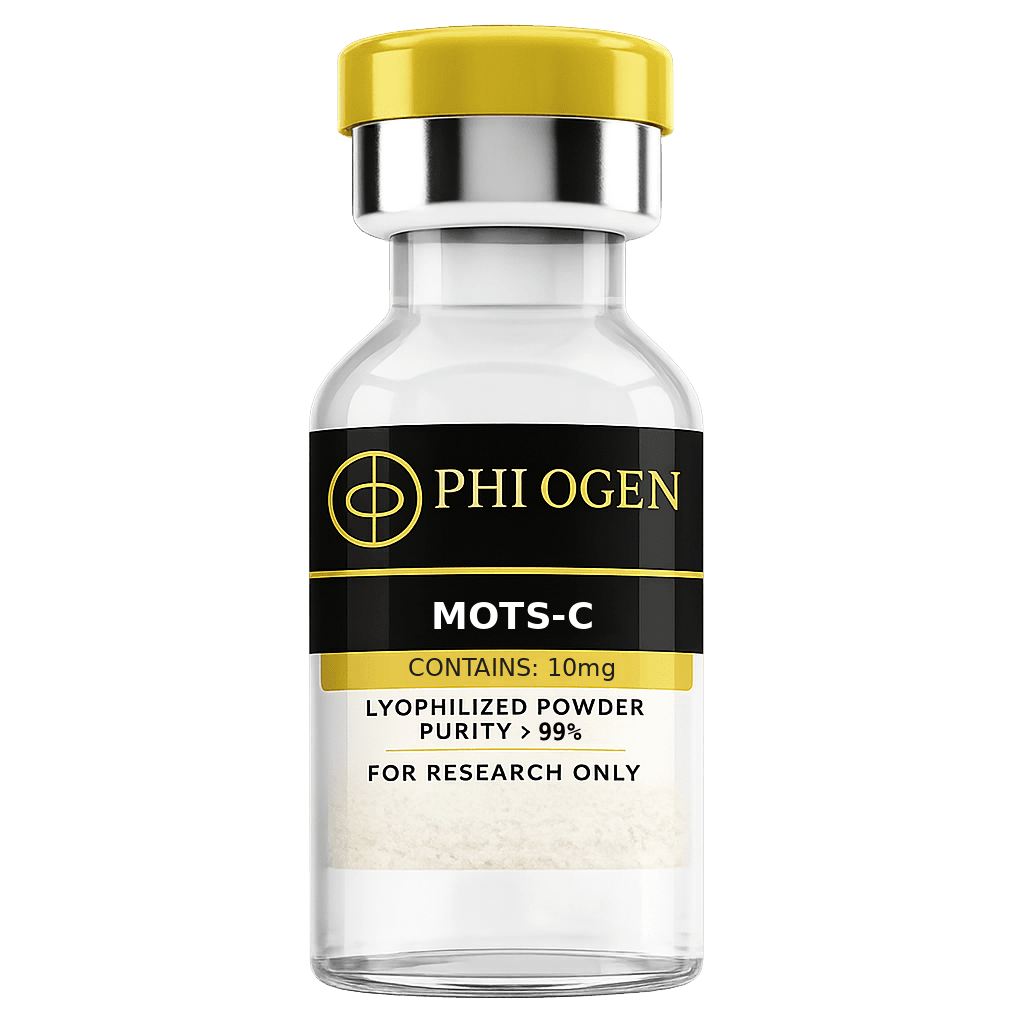
MOTS-c 10mg
Mitochondria-derived peptide for metabolic regulation, insulin sensitivity, and longevity.
MOTS-c — Metabolic Research Overview
Across metabolic and incretin research, MOTS-C is a mitochondrial-encoded peptide that activates AMPK signaling to promote glucose metabolism, improve insulin sensitivity, and enhance mitochondrial function. Studies suggest it mediates exercise-like metabolic benefits and may slow age-related metabolic decline, with applications in obesity, diabetes, and longevity research.
Primary research applications for MOTS-c include enhances insulin sensitivity, ampk activation for glucose metabolism, mitochondrial function support, anti-aging and longevity mechanisms. As a Metabolic compound, it is studied in the context of metabolic, mitochondria, insulin — areas where its mechanism of action has the most direct relevance in preclinical models.
In standard research protocols, MOTS-c is administered at 5–10 mg 3x per week subcutaneous, with a half-life of Estimated hours. This product is supplied by Phiogen as lyophilized powder with independent third-party Certificate of Analysis (COA) documentation confirming 99%+ purity and correct molecular identity on every batch. MOTS-c 10mg is sold strictly for laboratory and educational use only — it is not FDA-approved for human therapeutic use and is not intended for human consumption, clinical application, or use in animals.
Applications & Benefits
Effect Timeline
Expected milestones based on published preclinical data.
Metabolic receptor engagement begins. Early appetite modulation and glucose sensitivity improvements detectable.
Progressive improvements in glucose and insulin dynamics. Meaningful weight and fat reduction begins.
Visceral fat reduction measurable. Lipid profiles and metabolic markers show improvement.
Continued metabolic improvement. Insulin sensitivity stabilizes at improved baseline; weight loss sustained.
Metabolic receptor engagement begins. Early appetite modulation and glucose sensitivity improvements detectable.
Progressive improvements in glucose and insulin dynamics. Meaningful weight and fat reduction begins.
Visceral fat reduction measurable. Lipid profiles and metabolic markers show improvement.
Continued metabolic improvement. Insulin sensitivity stabilizes at improved baseline; weight loss sustained.
Timelines are derived from preclinical animal studies. Individual results in laboratory settings may vary. For educational purposes only.
Frequently Asked Questions
What is unique about MOTS-C's genomic origin?
MOTS-C is encoded within the mitochondrial genome — specifically the 12S rRNA gene — rather than the nuclear genome like most peptides. This makes it one of a small family of mitochondrial-derived peptides (MDPs) identified in recent years. Its mitochondrial origin means its expression is directly tied to mitochondrial metabolic status, and its circulating levels reflect mitochondrial health and energetic demands.
Why is MOTS-C described as an exercise mimetic?
Studies have shown that MOTS-C levels in plasma increase in response to acute aerobic exercise in human subjects. When administered exogenously in animal models, MOTS-C recapitulates metabolic adaptations associated with exercise including improved insulin sensitivity, AMPK activation, and enhanced mitochondrial fuel utilization. This has led to its classification among peptides that mimic certain molecular consequences of physical activity.
How does MOTS-C activate AMPK through the folate cycle?
MOTS-C has been shown to inhibit enzymes in the folate-dependent one-carbon metabolism pathway, leading to accumulation of AICAR (5-aminoimidazole-4-carboxamide ribonucleotide) — a naturally occurring AMPK activator. AICAR binds the gamma subunit of AMPK and mimics the effect of elevated cellular AMP:ATP ratio, triggering AMPK-dependent metabolic reprogramming. This represents a mechanistic link between mitochondrial peptide signaling and cellular energy homeostasis.
Reconstitution Calculator
Calculate exact BAC water volume and dose measurements for MOTS-c 10mg.
For laboratory use only. This calculator is a reference tool — verify all calculations before use. Always use sterile technique with bacteriostatic water and sterile syringes.
Effectiveness Profile
Relative effectiveness scores derived from published preclinical literature across key endpoints.
Scores are qualitative aggregates from animal and in vitro studies and are not a medical claim. For educational purposes only.
Key Study Findings
Identified as an exercise-mimicking peptide — plasma levels rise in response to physical exertion in human subjects
Shown to improve insulin sensitivity and glucose tolerance in diet-induced obese mouse models
AMPK activation by MOTS-C promotes skeletal muscle glucose uptake independent of insulin in preclinical studies
Circulating levels decline with age in both rodent and human studies, correlating with metabolic deterioration
Studies in aged mice demonstrate restoration of exercise capacity and metabolic flexibility following MOTS-C administration
MOTS-c at a Glance
🔬 Mechanism of Action
MOTS-C is a 16-amino acid mitochondrial-derived peptide encoded within the 12S rRNA gene of the mitochondrial genome, making it one of the few peptides with a non-nuclear genomic origin. It exerts metabolic effects primarily through activation of AMPK (AMP-activated protein kinase), a central cellular energy sensor that promotes glucose uptake, fatty acid oxidation, and mitochondrial biogenesis. MOTS-C also interferes with the folate cycle and de novo purine synthesis to generate AICAR (5-aminoimidazole-4-carboxamide ribonucleotide), an endogenous AMPK activator, linking mitochondrial status to whole-body metabolic regulation.
Dosing Protocol
Dosing information is derived from published animal studies and is provided for educational purposes only.
Related Topics
MOTS-c
For educational use only · Verified vendor
Quality Assurance
Related Guides
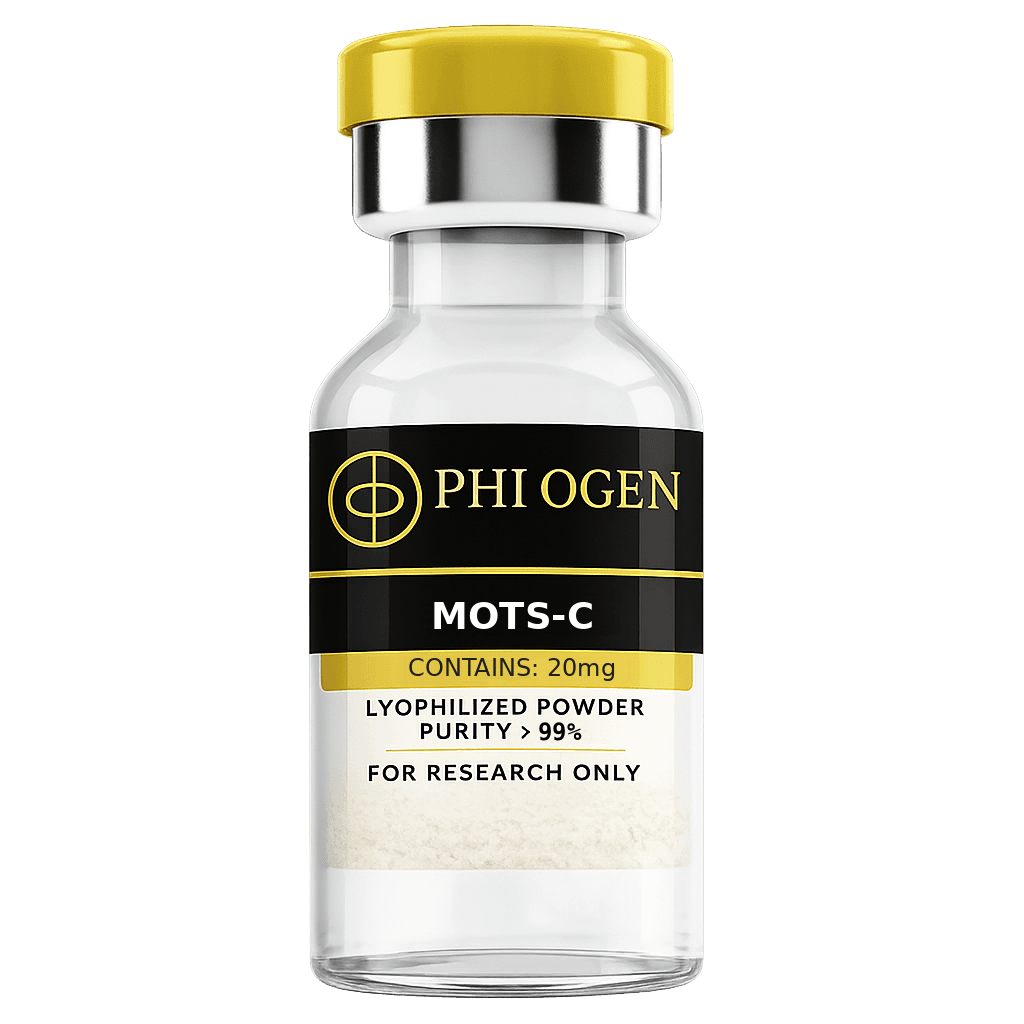
MOTS-c 20mg
MOTS-c 20mg — mitochondrial peptide for extended metabolic and longevity protocols.
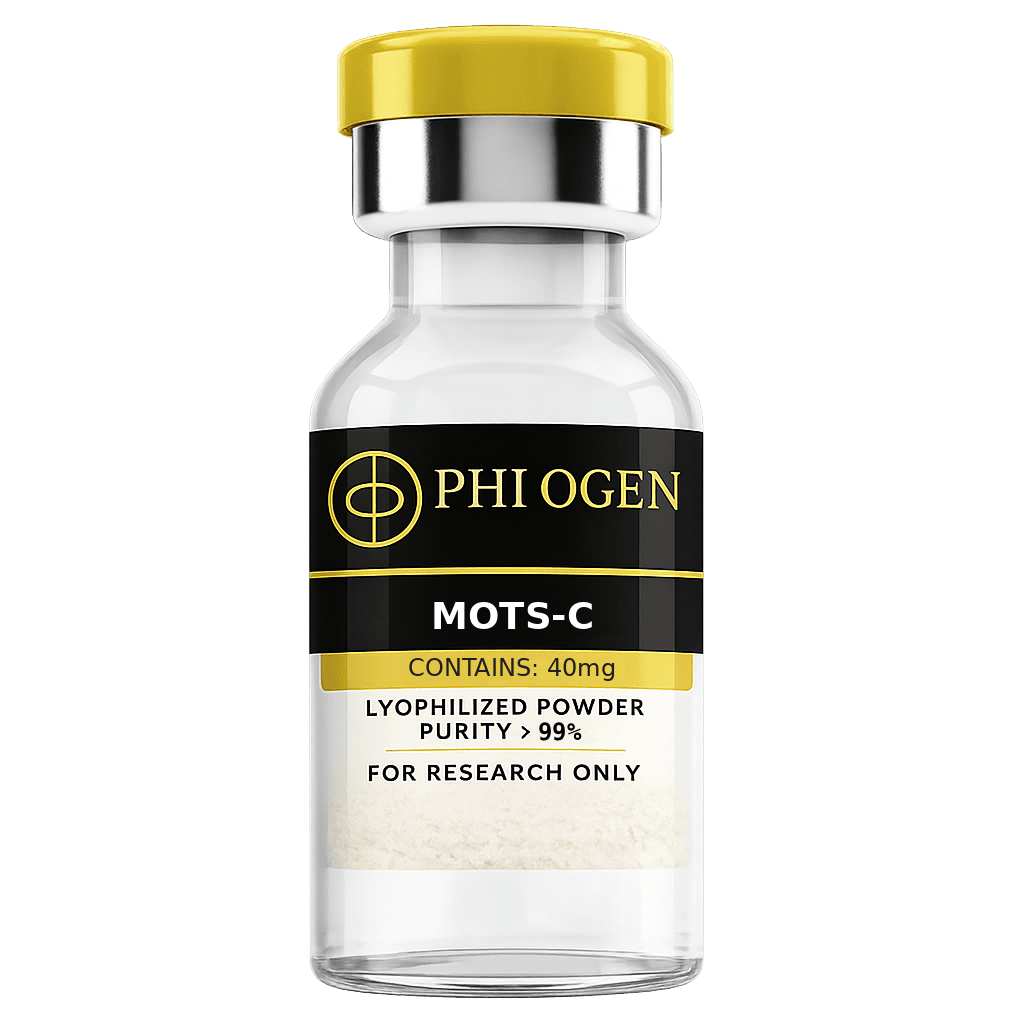
MOTS-c 40mg
MOTS-c 40mg — bulk size for comprehensive mitochondrial metabolic research.
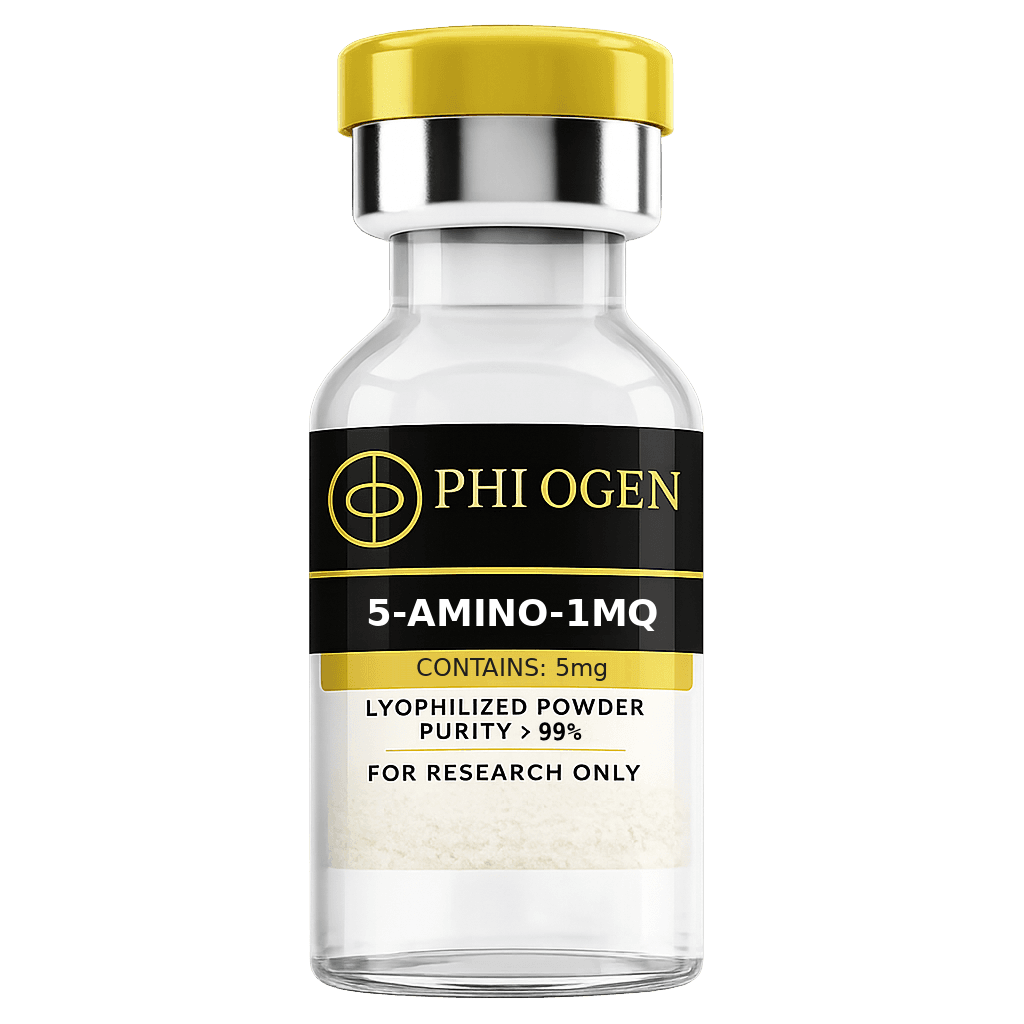
5-Amino-1MQ 5mg
5-Amino-1MQ 5mg — NNMT inhibitor entry size for fat loss and metabolic research.