
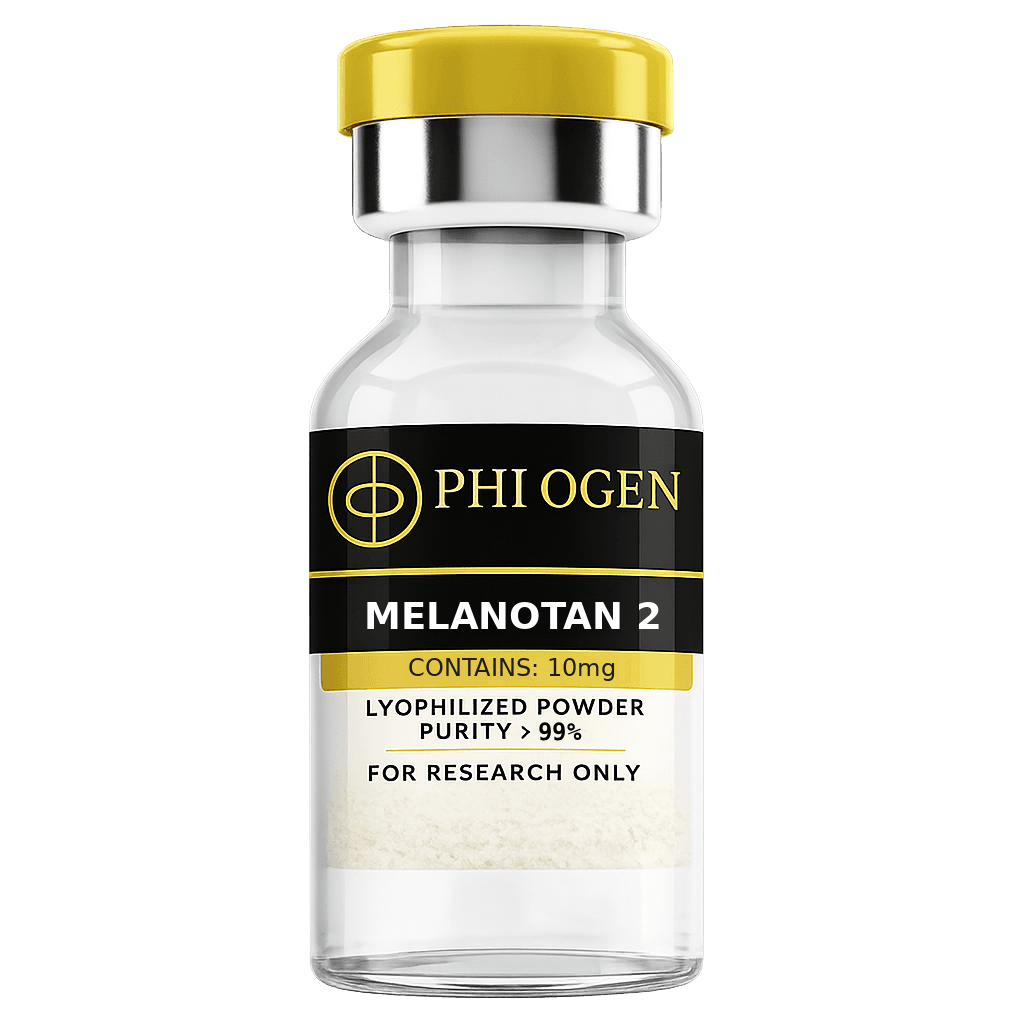
Melanotan II 10mg
Cyclic α-MSH analog — tanning, libido enhancement, and appetite regulation.
MT-2 — Melanocortin System Research
Across melanocortin-receptor research, Melanotan II (MT-2) is a synthetic cyclic analog of α-MSH that acts on MC1R, MC3R, and MC4R. It stimulates melanin production for UV-protective tanning, enhances libido through MC4R activation, and may suppress appetite. It produces faster and stronger tanning results than Melanotan I due to its broader receptor activation.
Primary research applications for MT-2 include rapid melanin production for sunless tanning, libido enhancement via mc4r, appetite regulation support, uv damage protection mechanisms. As a Melanocortin compound, it is studied in the context of melanocortin, tanning, melanin — areas where its mechanism of action has the most direct relevance in preclinical models.
In standard research protocols, MT-2 is administered at 0.5–1 mg subcutaneous titrate slowly, with a half-life of 30–60 minutes. This product is supplied by Phiogen as lyophilized powder with independent third-party Certificate of Analysis (COA) documentation confirming 99%+ purity and correct molecular identity on every batch. Melanotan II 10mg is sold strictly for laboratory and educational use only — it is not FDA-approved for human therapeutic use and is not intended for human consumption, clinical application, or use in animals.
Reconstitution Calculator
Calculate exact BAC water volume and dose measurements for Melanotan II 10mg.
For laboratory use only. This calculator is a reference tool — verify all calculations before use. Always use sterile technique with bacteriostatic water and sterile syringes.
Key Study Findings
Demonstrates potent melanogenesis induction via MC1R in melanocyte culture and animal UV-exposure models
Shown to suppress food intake and reduce body weight in rodent studies via hypothalamic MC4R-mediated pathways
Preclinical studies in rodents demonstrate CNS-mediated arousal effects, establishing the mechanism basis for PT-141's development
MC4R activation contributes to erectile function in rodent studies through central neuronal circuits distinct from peripheral vascular mechanisms
Studied as a model compound for investigating melanocortin system pharmacology across receptor subtypes
Effectiveness Profile
Relative effectiveness scores derived from published preclinical literature across key endpoints.
Scores are qualitative aggregates from animal and in vitro studies and are not a medical claim. For educational purposes only.
Dosing Protocol
Dosing information is derived from published animal studies and is provided for educational purposes only.
Effect Timeline
Expected milestones based on published preclinical data.
Central melanocortin receptor engagement within hours. Acute libido and mood effects in preclinical models.
Melanin synthesis stimulation begins (for tanning peptides). Libido enhancement effects become measurable.
Maximum libido and pigmentation effects established in preclinical models. HPG axis stimulation measurable.
Effects sustained with reduced maintenance dosing. Hormonal balance improvements stabilize.
Central melanocortin receptor engagement within hours. Acute libido and mood effects in preclinical models.
Melanin synthesis stimulation begins (for tanning peptides). Libido enhancement effects become measurable.
Maximum libido and pigmentation effects established in preclinical models. HPG axis stimulation measurable.
Effects sustained with reduced maintenance dosing. Hormonal balance improvements stabilize.
Timelines are derived from preclinical animal studies. Individual results in laboratory settings may vary. For educational purposes only.
Frequently Asked Questions
What melanocortin receptors does MT-2 activate and what are their functions?
MT-2 is a non-selective agonist at all five melanocortin receptors. MC1R mediates pigmentation in melanocytes. MC2R is the primary ACTH receptor in the adrenal gland. MC3R and MC4R are expressed in the brain and regulate energy homeostasis, arousal, and feeding behavior. MC5R is found in exocrine glands and immune cells. MT-2's broad activity across this receptor family produces the composite pharmacological profile observed in studies.
How does MT-2 stimulate melanogenesis?
Activation of MC1R on cutaneous melanocytes by MT-2 stimulates adenylyl cyclase and elevates cAMP, which activates protein kinase A and downstream transcription factors including MITF (microphthalmia-associated transcription factor). MITF drives expression of enzymes in the melanin synthesis pathway including tyrosinase, resulting in increased eumelanin production. This process occurs independent of UV radiation, though UV light potentiates the response by damaging DNA and activating pro-melanogenic signaling.
How does MT-2 differ from alpha-MSH structurally?
Alpha-MSH is a linear 13-amino acid peptide with rapid enzymatic degradation in vivo. MT-2 is a cyclic 7-amino acid analog that incorporates a His-D-Phe-Arg-Trp pharmacophore responsible for melanocortin receptor binding, with cyclization that confers resistance to protease digestion and extends bioavailability. This structural optimization results in greater potency and duration of action compared to native α-MSH in pharmacological studies.
Applications & Benefits
🔬 Mechanism of Action
Melanotan II (MT-2) is a synthetic cyclic analog of alpha-melanocyte-stimulating hormone (α-MSH) that acts as a non-selective agonist at all five melanocortin receptor subtypes (MC1R through MC5R). Its primary studied effects include potent melanogenesis via MC1R activation on melanocytes (stimulating eumelanin production), CNS-mediated effects on arousal via MC3R and MC4R, and appetite suppression through hypothalamic melanocortin pathways. Its broad receptor activation profile distinguishes it pharmacologically from more selective analogs such as PT-141.
Related Topics
MT-2
For educational use only · Verified vendor
Quality Assurance
Related Guides
Kisspeptin-10 10mg
Hypothalamic neuropeptide for HPG axis activation, testosterone, and libido.
Kisspeptin-10 5mg
Kisspeptin-10 5mg — HPG axis activation and reproductive hormone regulation.
Melanotan I 10mg
Linear α-MSH analog — melanin production and UV-protective tanning without sexual side effects.