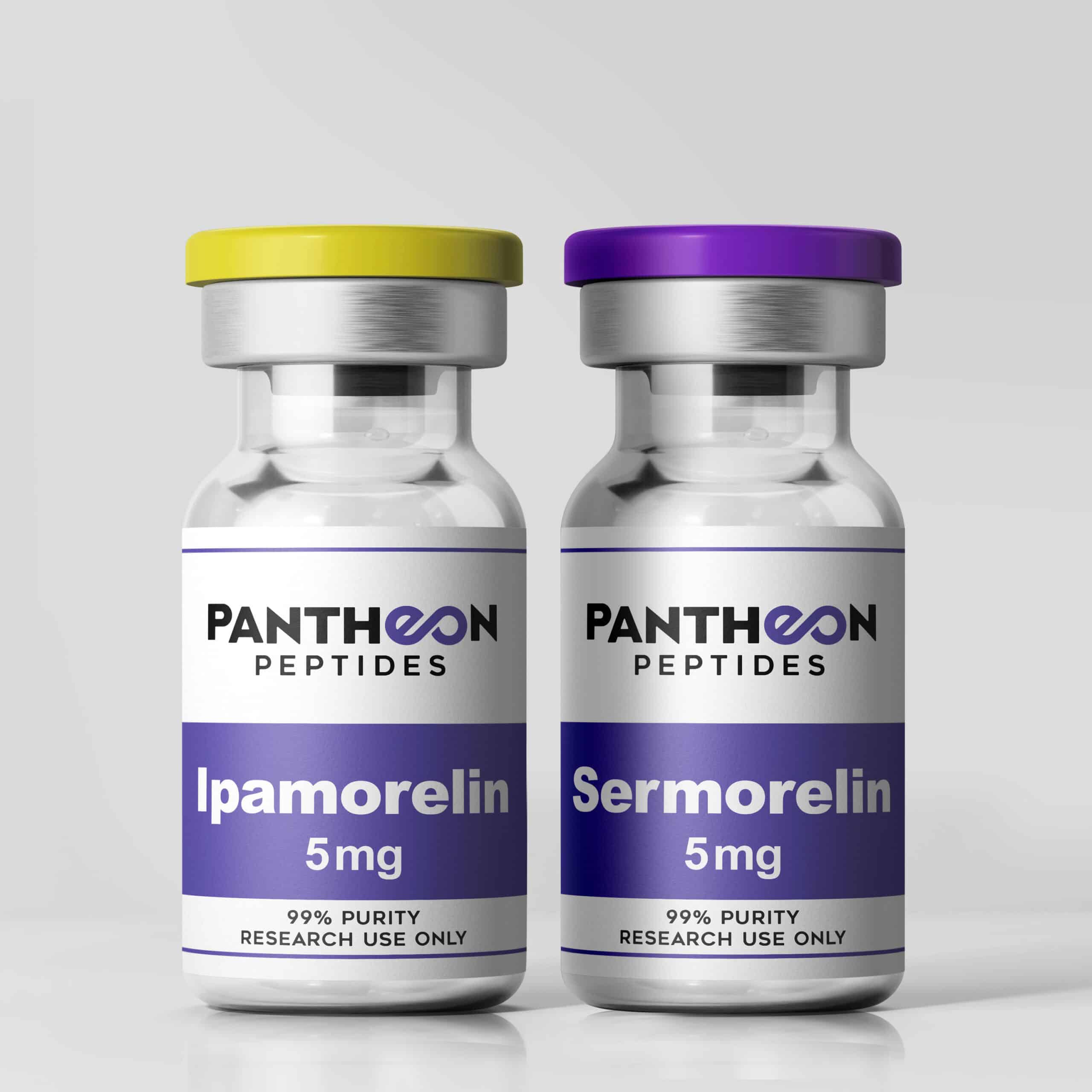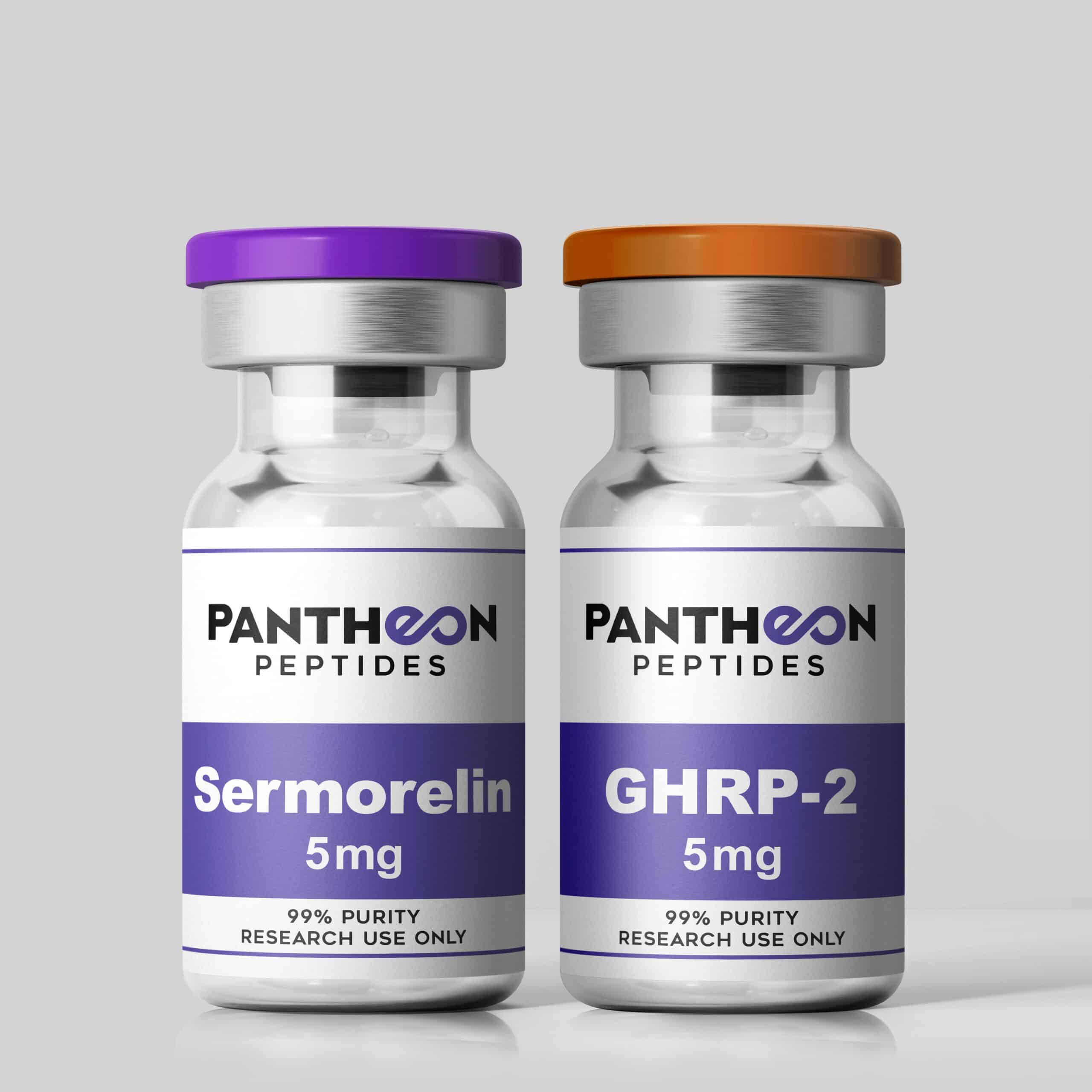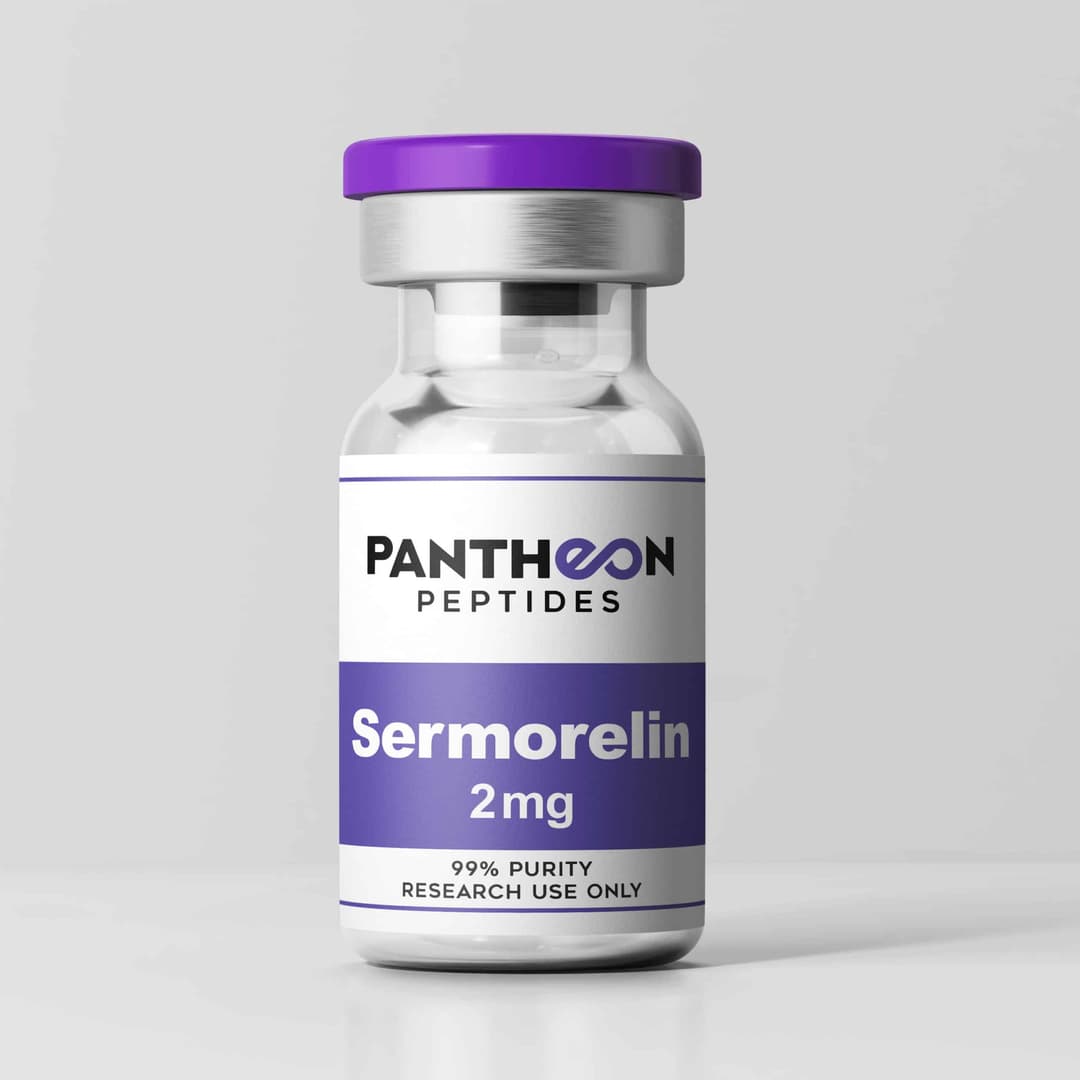
Sermorelin
GHRH analog that stimulates natural growth hormone production.
What Is Sermorelin?
Sermorelin is a synthetic analog of growth hormone-releasing hormone (GHRH). It stimulates the pituitary gland to produce and secrete growth hormone naturally. Widely studied for its ability to restore youthful GH levels in anti-aging protocols.
🔬 Mechanism of Action
Sermorelin is a synthetic peptide corresponding to the first 29 amino acids of endogenous growth hormone-releasing hormone (GHRH 1-29-NH2), representing the shortest fragment known to retain full GHRH receptor binding and bioactivity. It stimulates pituitary somatotroph cells to synthesize and secrete growth hormone through GHRH receptor activation and downstream cAMP signaling. With a half-life of approximately 10–20 minutes, sermorelin produces brief, physiologically timed GH pulses most suitable when administered in the evening to coincide with natural nocturnal GH release.
Effectiveness Profile
Relative effectiveness scores derived from published preclinical literature across key endpoints.
Scores are qualitative aggregates from animal and in vitro studies and are not a medical claim. For educational purposes only.
Applications & Benefits
Key Study Findings
Stimulates pulsatile GH release with a half-life of 10–20 minutes, enabling physiological pulse mimicry
Previously approved for pediatric GH deficiency (FDA-approved Geref prior to discontinuation)
Studies demonstrate IGF-1 elevation following sustained nightly administration in aging preclinical models
Considered to preserve hypothalamic-pituitary feedback regulation, unlike direct GH administration
Investigated for age-related GH decline as an alternative to GH replacement therapy
Effect Timeline
Expected milestones based on published preclinical data.
First amplified GH pulses detected. Slight IGF-1 elevation begins; anabolic signaling pathways activate.
IGF-1 levels plateau at elevated baseline. Protein synthesis increases; recovery from training improves noticeably.
Lean mass accumulation measurable. Fat oxidation increases; sleep quality improvements typically reported.
Maximum body composition improvements at sustained elevated GH/IGF-1 levels. Anti-aging mechanisms fully engaged.
First amplified GH pulses detected. Slight IGF-1 elevation begins; anabolic signaling pathways activate.
IGF-1 levels plateau at elevated baseline. Protein synthesis increases; recovery from training improves noticeably.
Lean mass accumulation measurable. Fat oxidation increases; sleep quality improvements typically reported.
Maximum body composition improvements at sustained elevated GH/IGF-1 levels. Anti-aging mechanisms fully engaged.
Timelines are derived from preclinical animal studies. Individual results in laboratory settings may vary. For educational purposes only.
Dosing Protocol
Dosing information is derived from published animal studies and is provided for educational purposes only.
Reconstitution Calculator
Calculate exact BAC water volume and dose measurements for Sermorelin.
For laboratory use only. This calculator is a reference tool — verify all calculations before use. Always use sterile technique with bacteriostatic water and sterile syringes.
Synergistic Stack Combinations
Frequently Asked Questions
Why is sermorelin typically administered at night?
Endogenous GH secretion follows a circadian rhythm with the largest pulse occurring during slow-wave sleep. Sermorelin administered in the evening or before sleep is timed to augment this natural nocturnal GH surge rather than interfere with daytime hormonal patterns. Studies suggest this timing optimizes IGF-1 response while maintaining physiological GH rhythmicity.
How does sermorelin differ from synthetic GH in studies applications?
Unlike exogenous growth hormone, sermorelin stimulates the pituitary to produce its own GH rather than replacing it with exogenous hormone. This preserves the neuroendocrine feedback loop, including somatostatin inhibition, which prevents GH levels from rising to supraphysiological levels. This is considered a more physiologically conservative model for studying GH axis stimulation.
What is the significance of sermorelin's 29-amino acid structure?
GHRH 1-29-NH2 represents the minimal biologically active fragment of the full 44-amino acid GHRH molecule. The first 29 residues contain the receptor recognition and activation domain, while the remaining amino acids contribute to stability and pharmacokinetics. Sermorelin retains full receptor-binding efficacy, making it a well-characterized tool for studying the GHRH signaling pathway.
Related Topics
Sermorelin
For educational use only · Verified vendor