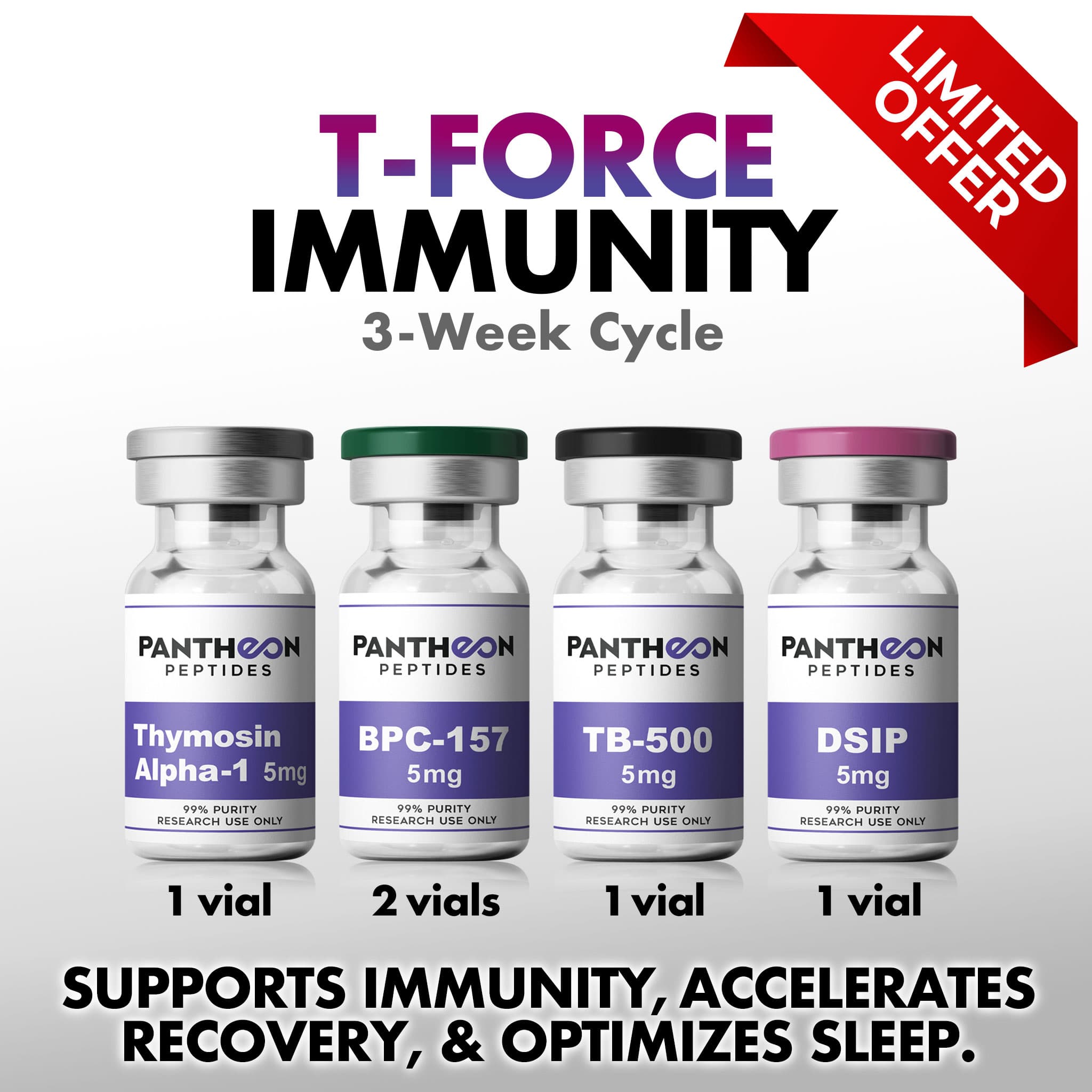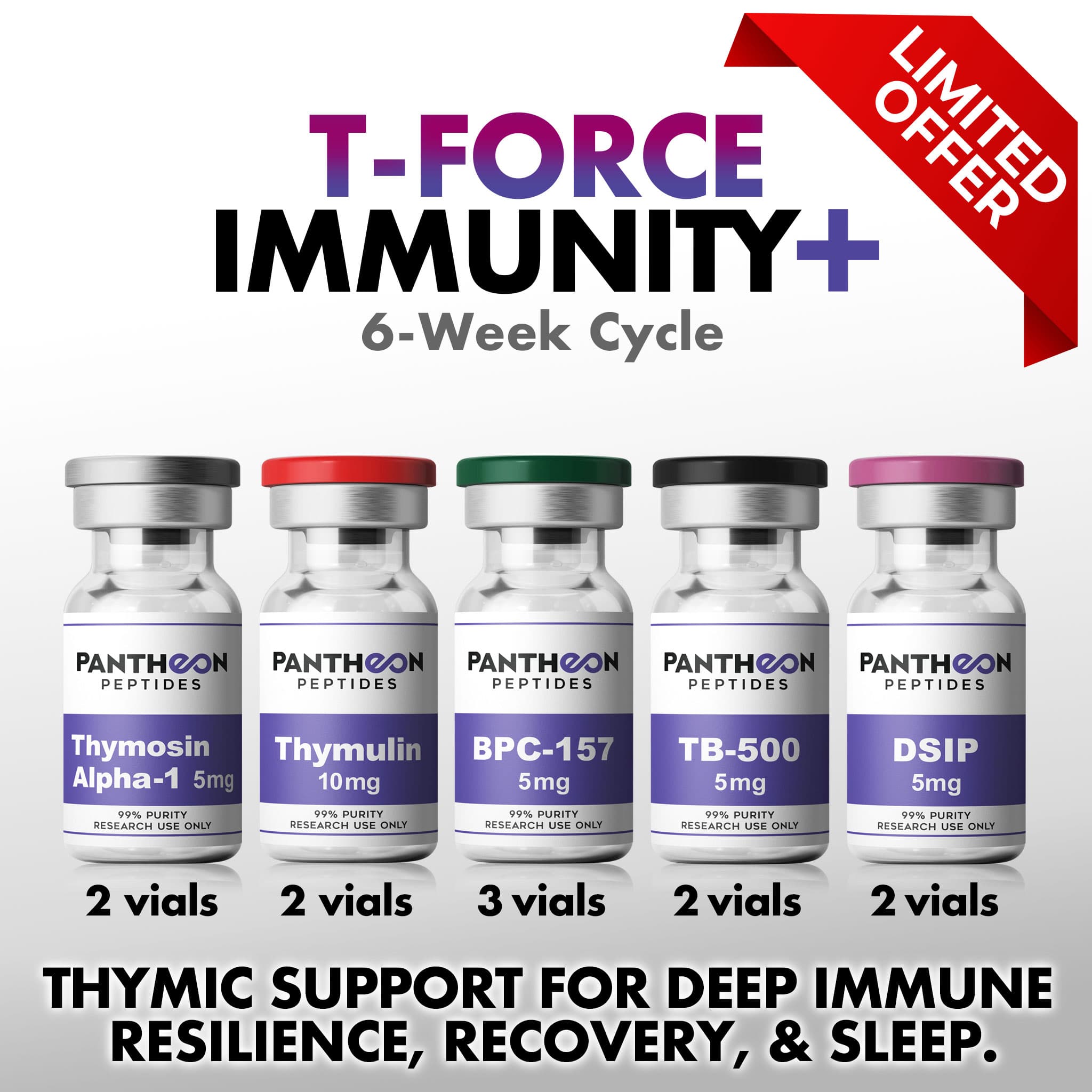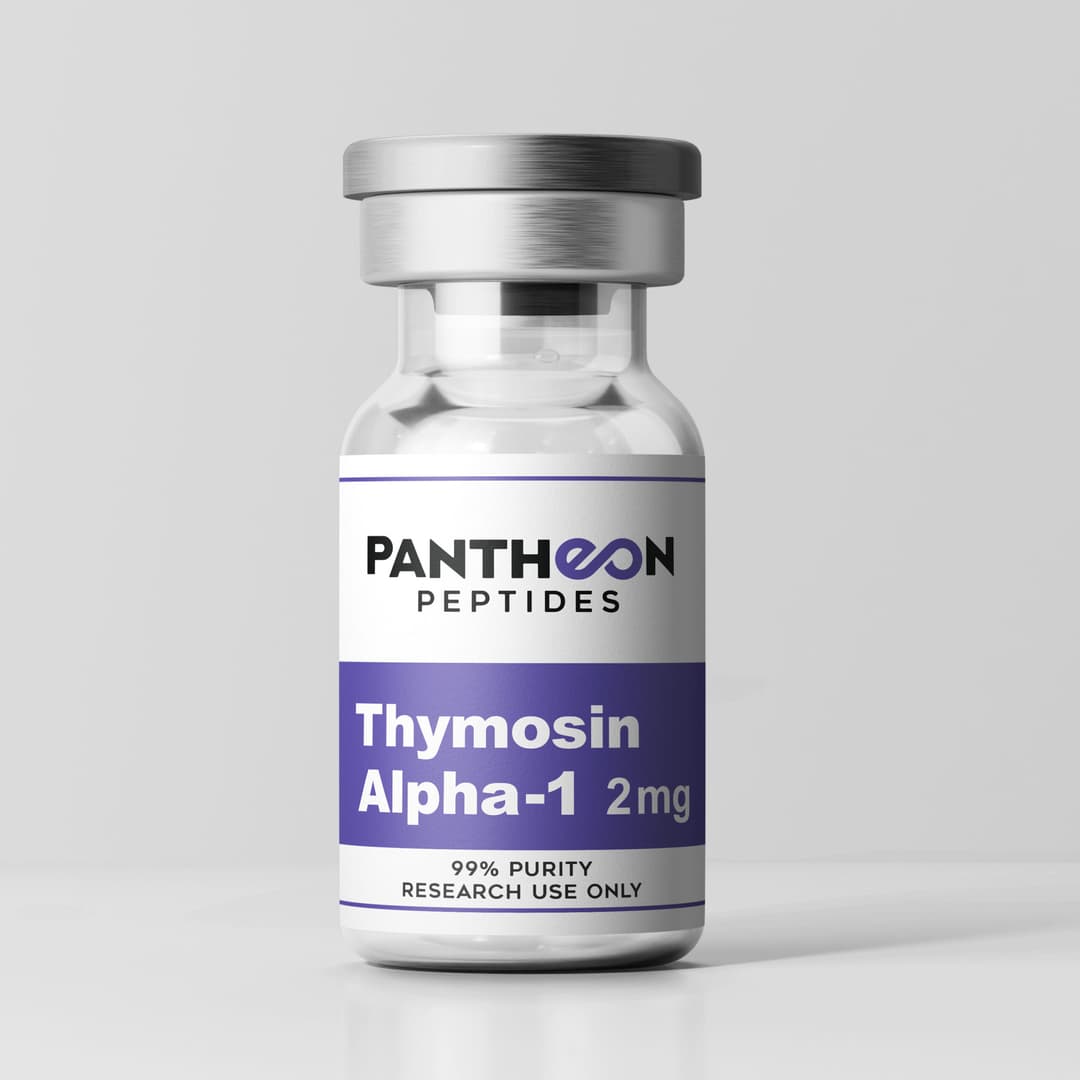
Thymosin Alpha-1
Thymic peptide studied for immune system enhancement and T-cell activation.
What Is Thymosin Alpha-1?
Thymosin Alpha-1 (Tα1) is a 28-amino acid peptide naturally produced by the thymus gland. It is studied for its ability to modulate immune function by promoting T-cell maturation and activation. Applications include immune deficiency models, cancer biology, and chronic infection studies. It is a key regulator of both innate and adaptive immunity.
🔬 Mechanism of Action
Thymosin Alpha-1 (Tα1) is a 28-amino acid peptide originally isolated from thymosin fraction 5 of calf thymus by Allan Goldstein and colleagues. It functions as a potent modulator of both innate and adaptive immunity by enhancing T-cell maturation, differentiation, and antigen-specific responses. Tα1 activates Toll-like receptors (TLR-2 and TLR-9) on dendritic cells, promoting antigen presentation and downstream Th1 cytokine production including IFN-α, IFN-γ, and IL-12. It has been studied extensively in infectious disease, cancer immunotherapy, and vaccine adjuvant laboratory contexts.
Effectiveness Profile
Relative effectiveness scores derived from published preclinical literature across key endpoints.
Scores are qualitative aggregates from animal and in vitro studies and are not a medical claim. For educational purposes only.
Applications & Benefits
Key Study Findings
FDA-approved analog (Zadaxin/thymalfasin) used in multiple countries for hepatitis B and C and as a cancer immunotherapy adjuvant
Stimulates T-cell differentiation and maturation from bone marrow progenitors in thymic and peripheral compartments
Upregulates MHC class I expression on tumor cells, enhancing cytotoxic T-lymphocyte recognition in cancer models
Activates TLR-2 and TLR-9 signaling in dendritic cells to enhance antigen presentation and Th1 immune polarization
Studied as a vaccine adjuvant in aging populations where thymic involution reduces T-cell-mediated immune responses
Effect Timeline
Expected milestones based on published preclinical data.
T-cell receptor modulation begins. Early innate immune response activation; cytokine expression shifts.
T-cell counts and activity measurably increase. Adaptive immunity strengthens; inflammatory markers begin to normalize.
Immune function reaches optimized state. Chronic inflammation markers reduce; resilience to pathogens improves.
Full immune optimization maintained. Long-term immunomodulatory effects of the cycle sustained post-treatment.
T-cell receptor modulation begins. Early innate immune response activation; cytokine expression shifts.
T-cell counts and activity measurably increase. Adaptive immunity strengthens; inflammatory markers begin to normalize.
Immune function reaches optimized state. Chronic inflammation markers reduce; resilience to pathogens improves.
Full immune optimization maintained. Long-term immunomodulatory effects of the cycle sustained post-treatment.
Timelines are derived from preclinical animal studies. Individual results in laboratory settings may vary. For educational purposes only.
Dosing Protocol
Dosing information is derived from published animal studies and is provided for educational purposes only.
Reconstitution Calculator
Calculate exact BAC water volume and dose measurements for Thymosin Alpha-1.
For laboratory use only. This calculator is a reference tool — verify all calculations before use. Always use sterile technique with bacteriostatic water and sterile syringes.
Synergistic Stack Combinations
Key Scientific Literature
Thymosin alpha-1 in treatment of hepatitis B and C
Key finding: TA-1 significantly improved antiviral treatment response rates and T-cell function in chronic hepatitis patients.
Thymosin alpha-1 reduces the mortality of severe sepsis
Key finding: TA-1 significantly reduced 28-day mortality in severe sepsis patients, likely through immune system restoration.
Citations reference published peer-reviewed studies. This is not a complete literature review. All studies were conducted in preclinical or controlled clinical settings. Content is for educational reference only.
Frequently Asked Questions
What is the clinical background of thymosin alpha-1?
Thymosin alpha-1 was isolated by Allan Goldstein and colleagues at George Washington University in the 1970s from thymosin fraction 5, a thymus-derived peptide mixture with immune-stimulating properties. A synthetic version (thymalfasin, Zadaxin) is approved in over 35 countries for treatment of hepatitis B and C, and is used as a cancer immunotherapy adjuvant and vaccine enhancer. It is one of the most clinically advanced peptide immunomodulators in studies.
How does thymosin alpha-1 enhance T-cell function?
Tα1 acts at multiple stages of T-cell biology. It promotes the differentiation of pre-T lymphocytes in the thymus, enhances the expression of T-cell surface markers, and augments cytotoxic T-cell responses. At the level of antigen presentation, it upregulates MHC class I expression on target cells and stimulates dendritic cell maturation via TLR signaling. The net effect is a more robust antigen-specific adaptive immune response.
Is thymosin alpha-1 relevant for aging-related immune decline?
Yes, thymic involution — the age-related shrinkage of the thymus — leads to declining T-cell output and is considered a primary driver of immunosenescence. Because Tα1 supports T-cell maturation through both thymic and peripheral pathways, it has been studied as an intervention in aging immune models. Clinical studies in elderly populations have shown improved vaccine responsiveness and T-cell reactivity following Tα1 administration.
Related Topics
TA-1
For educational use only · Verified vendor