
Growth Hormone Peptides — CJC-1295, Ipamorelin, Sermorelin, Tesamorelin
Five compounds, two mechanisms, one goal — stimulating endogenous growth hormone release while keeping the feedback loops your pituitary depends on intact.
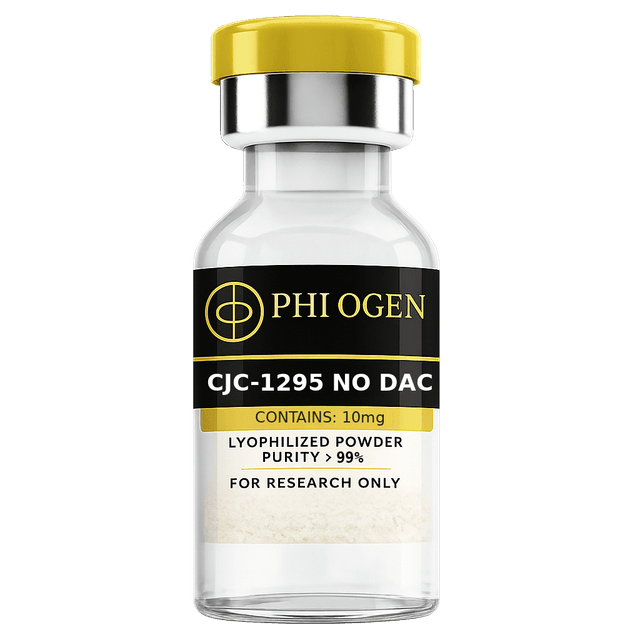
CJC-1295
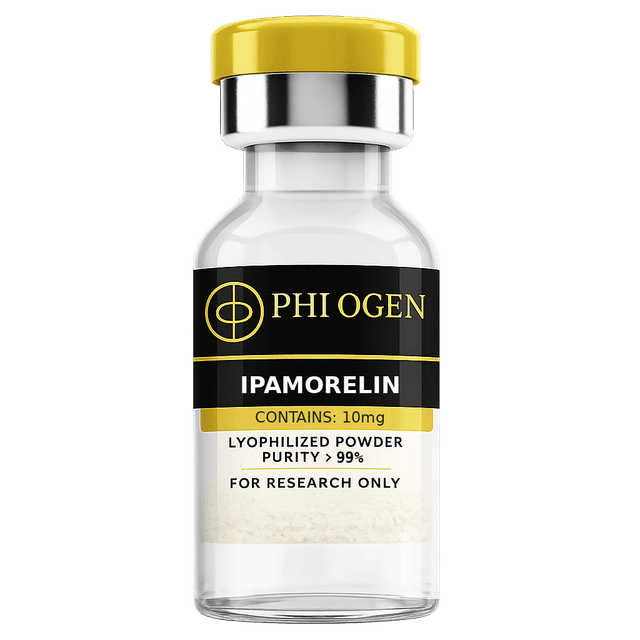
Ipamorelin
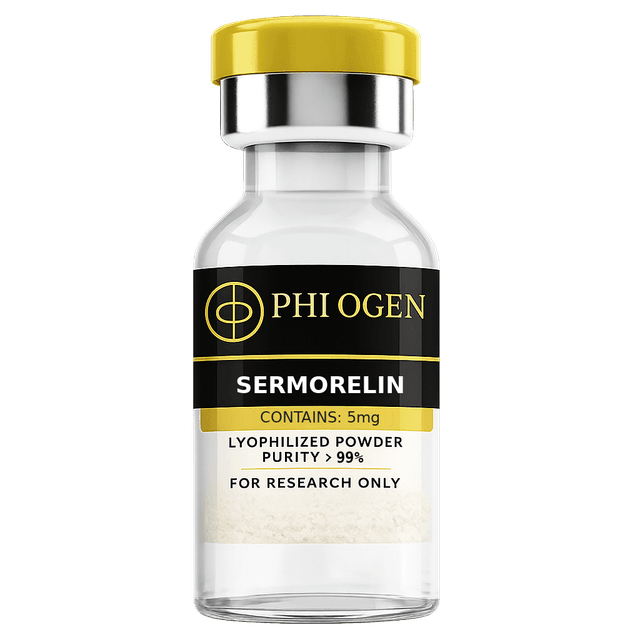
Sermorelin
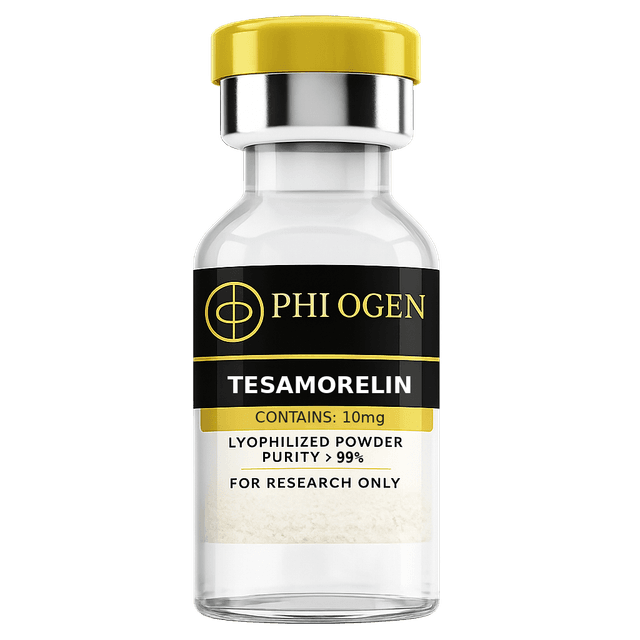
Tesamorelin
Two Pathways, One Pituitary
Your pituitary gland releases growth hormone in pulses throughout the day, with the largest pulse typically occurring in the first few hours of deep sleep. Those pulses are coordinated by two separate signals from the hypothalamus: growth hormone releasing hormone (GHRH), which acts on one set of pituitary receptors to tell the gland to release stored GH, and ghrelin, which acts on a different receptor (GHSR) to amplify that release. The body uses both signals simultaneously to produce a well-timed, appropriately-scaled GH pulse.
Research peptides in the GH space split cleanly into these two categories. GHRH analogs — Sermorelin, CJC-1295, and Tesamorelin — act on the GHRH receptor. GH-releasing peptides (GHRPs) — Ipamorelin being the canonical example — act on the ghrelin receptor. The reason the CJC-1295 plus Ipamorelin combination has become the default GH stack is that it combines both signals, producing a synergistic pulse that is larger than either compound delivers in isolation and closer to the natural physiological event the pituitary expects.
Compound Reference
| Compound | Mechanism | Typical Dose |
|---|---|---|
| CJC-1295 (no DAC) | GHRH analog, 30-min half-life | 100 mcg |
| CJC-1295 (with DAC) | GHRH analog + DAC, ~8-day half-life | 1–2 mg/week |
| Ipamorelin | Selective ghrelin receptor agonist | 100–300 mcg |
| Sermorelin | Truncated GHRH (1-29) | 200–500 mcg |
| Tesamorelin | Stabilized GHRH analog | 1–2 mg daily |
Why CJC-1295 (No DAC) Beats CJC-1295 (With DAC)
The two versions of CJC-1295 produce fundamentally different physiological outcomes despite sharing most of their structure. CJC-1295 with DAC (Drug Affinity Complex) has been modified to bind albumin in the bloodstream, extending its half-life from about thirty minutes to approximately eight days. That sounds like a pharmacokinetic win — and for some research applications it is — but the downside is significant. Sustained, non-pulsatile GHRH signaling over a week blunts the natural pulse pattern that makes growth hormone effective in the first place. Without pulses, you get elevated average GH levels but diminished downstream IGF-1 tissue response.
CJC-1295 without DAC has a 30-minute half-life, which sounds inconvenient until you realize that 30 minutes is almost exactly the window of natural GHRH signaling. Combined with Ipamorelin — itself a short-acting pulse-amplifier — you get a concentrated, clean GH pulse that mimics the physiological event your pituitary is designed to respond to. Research outcomes consistently favor the pulse approach over the sustained-elevation approach for body composition, recovery, and sleep quality endpoints, which is why the no-DAC version has become the community default.
The Classic CJC-1295 + Ipamorelin Protocol
The benchmark protocol for GH axis research is 100 mcg of CJC-1295 (no DAC) plus 100–200 mcg of Ipamorelin, combined in a single subcutaneous injection, administered once daily at bedtime on an empty stomach. The bedtime timing serves two purposes: it synchronizes the exogenous pulse with the body's natural largest GH pulse of the day, amplifying the combined effect; and it minimizes interference from meals, since elevated insulin blunts GH response significantly.
Typical cycles run 8 to 12 weeks on, 4 weeks off, repeated quarterly. Longer continuous use is not strictly contraindicated, but the evidence suggests periodic breaks preserve pituitary response and prevent the small but real desensitization that can occur with months of continuous stimulation. IGF-1 bloodwork at week 4 and week 8 of a cycle is the best single measurement for confirming the protocol is producing its intended biochemical effect — IGF-1 should rise measurably above the researcher's pre-cycle baseline.
Tesamorelin — The Specialist Compound
Tesamorelin occupies a specific niche in the GH peptide space. It is a stabilized GHRH analog, originally approved for HIV-associated lipodystrophy — a condition marked by visceral fat accumulation. The body of clinical research on Tesamorelin specifically demonstrates significant reductions in visceral adipose tissue with sustained use at 1–2 mg daily. Researchers interested in visceral fat reduction as a specific endpoint, rather than general GH support, often choose Tesamorelin over the CJC-1295/Ipamorelin stack, because its clinical evidence for that specific outcome is stronger than any other peptide in this class. The tradeoff is cost (Tesamorelin is typically the most expensive GH peptide per research cycle) and dose frequency (daily rather than just evening).
Sermorelin — The Gentle Option
Sermorelin is the oldest commercially-available GHRH analog, essentially a truncated version of natural GHRH containing only the first 29 amino acids needed for receptor binding. It produces a milder GH pulse than CJC-1295 and a substantially shorter duration of action. Sermorelin is often chosen by researchers who want a gentle, physiological approach to GH support rather than the more pronounced elevation of CJC-1295 stacks. It is also the most forgiving compound in this class from a side-effect standpoint, making it a common starting point for researchers new to GH peptide work.
Featured GH Peptides
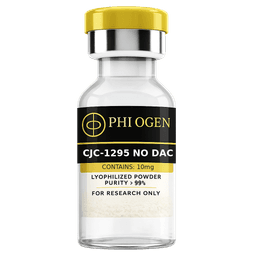
CJC-1295 No DAC 10mg
GHRH analog — stimulates natural pulsatile growth hormone release. Pairs with Ipamorelin.
$79.99$71.99—Buy Now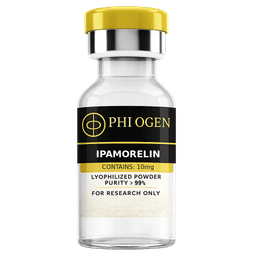
Ipamorelin 10mg
Selective GH secretagogue with minimal side effects — the cleanest GHRP available.
$59.99$53.99—Buy Now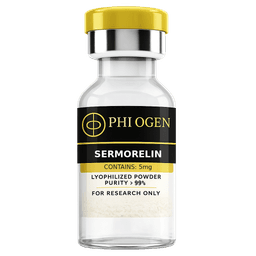
Sermorelin 5mg
GHRH analog that stimulates natural growth hormone production for anti-aging and body composition.
$69.99$62.99—Buy Now
Tesamorelin 10mg
GHRH analog with robust clinical data for visceral fat reduction and metabolic improvement.
$119.99$107.99—Buy NowGH Peptides FAQ
Will GH peptides show up on routine bloodwork?
Not directly — standard panels do not measure CJC-1295 or Ipamorelin. However, IGF-1 levels will rise measurably during an effective cycle, which is both how you confirm the protocol is working and what a physician looking at your labs would notice.
Can I use these with a GLP-1 protocol?
Yes. The mechanisms do not overlap — GLP-1 agonists act on gut hormone pathways, GH peptides act on pituitary pathways. Many researchers combine the two during metabolic protocols to preserve lean mass while losing fat.
Why not just use exogenous HGH?
Exogenous HGH produces sustained, non-pulsatile GH elevation, which carries different risk profiles (joint pain, insulin resistance, gynecomastia) and also suppresses endogenous pituitary output. GH peptides work with the pituitary rather than replacing it, which preserves the natural pulse pattern and feedback loops.
Is it okay to take more than 300 mcg of ipamorelin?
Research shows a saturation point around 200–300 mcg where higher doses do not produce proportionally larger GH pulses — the ghrelin receptor is fully occupied. Beyond that dose, you add side-effect potential without research benefit.
Complete GH Peptide Catalog
CJC-1295, Ipamorelin, Sermorelin, Tesamorelin, and pre-mixed blends — all COA verified.
Browse GH Peptides →